West Nile virus is a mosquito-borne illness that poses a genuine seasonal risk in Barrie and the Lake Simcoe region. This guide explains how the virus spreads, what symptoms to watch for, who faces the most risk, and what Barrie property owners can do to reduce their exposure. It is for homeowners, landlords, and property managers who want practical, medically accurate information during mosquito season — not generic public health messaging.
Key Takeaways
- West Nile virus is transmitted through the bite of an infected mosquito — primarily Culex pipiens and Culex restuans, which breed in standing water and can disperse roughly one to two kilometres from where they hatched.
- About 80% of people infected with WNV show no symptoms; approximately 20% develop West Nile fever; less than 1% develop severe neurological illness.
- Standing water on your property is the primary breeding condition you can control — gutters, bird baths, rain barrels, and ornamental ponds all support mosquito development within metres of your home.
- There is no approved vaccine for West Nile virus in humans; prevention depends on eliminating breeding sites and using personal protection during mosquito season.
- The Simcoe Muskoka District Health Unit monitors WNV activity in Barrie throughout mosquito season — their surveillance reports identify when and where positive mosquito pools are found in the region.
What Is West Nile Virus?
West Nile virus (WNV) is a mosquito-borne illness spread through the bite of infected Culex mosquitoes. It is now established across North America, and Ontario sees confirmed human cases each mosquito season.
The transmission cycle runs through infected birds as natural hosts. Infected mosquitoes acquire the virus by feeding on infected birds, then pass it to humans and other animals through bites. Dead birds — particularly crows, jays, and ravens — are often the first sign of active WNV circulation in a local area. If you find dead birds in Barrie during mosquito season, the Simcoe Muskoka District Health Unit has protocols for reporting them to the provincial surveillance program.
No human-to-human transmission of West Nile virus has been documented through ordinary contact. In very rare cases, WNV has been transmitted through blood transfusions and organ transplants. Vertical transmission can occur in mosquitoes. The incubation period following a bite from an infected mosquito is 2 to 15 days.
How West Nile Virus Spreads in Barrie
The Role of Lake Simcoe’s Geography
Properties along the Lake Simcoe shoreline and in Barrie’s lower-lying areas face specific conditions that increase mosquito pressure compared to inland locations. Shoreline vegetation, shallow water edges, storm drainage channels, and the humidity generated by the lake itself create productive breeding habitat for Culex species at a density that many Barrie residents underestimate. These are not conditions that exist only near the water’s edge — they extend inland through drainage patterns, depressions in lawns, and poorly graded lots that hold water after rain.
Culex pipiens and Culex restuans — the two mosquito species most responsible for WNV transmission in Ontario — typically disperse up to roughly one to two kilometres from their breeding sites. This means conditions across your neighbourhood, not only your own lot, contribute to the mosquitoes reaching your property. Eliminating standing water on your property removes the breeding habitat within your direct control. That still matters: each reduced breeding site lowers local mosquito density, and the conditions on your property are what you can act on directly.
Mosquito Surveillance in the Region
The Simcoe Muskoka District Health Unit runs active mosquito surveillance throughout mosquito season. Their program collects and tests adult mosquitoes and monitors bird mortality to track WNV activity across the region. When a WNV-positive mosquito pool is found in a specific area of Barrie, that information is published in their surveillance reports. Checking those reports provides more specific guidance than provincial-level data — a positive mosquito pool confirmed in your neighbourhood changes the risk picture in a way that a regional or provincial average does not reflect at the property level.
West Nile Fever: Mild Symptoms and What to Expect
About 80% of people infected with West Nile virus show no symptoms. Approximately 20% develop West Nile fever — a flu-like illness that typically involves fever, body aches, joint pain, severe headache, and fatigue, sometimes with a skin rash. Mild symptoms generally resolve within a few days to a week without medical intervention.
The clinical presentation of West Nile fever overlaps substantially with other common summer illnesses, so confirming WNV requires laboratory testing. If you develop flu-like symptoms in the days following outdoor exposure in Barrie — particularly in August and September, when WNV activity in Ontario typically peaks — mention the timing and your outdoor activities to your doctor. Most people with mild West Nile fever symptoms recover fully without specific treatment.
West Nile Encephalitis: Severe Symptoms and Risk Factors
Who Faces the Greatest Risk
Less than 1% of people infected with West Nile virus develop severe neurological illness — a condition known as West Nile encephalitis or West Nile neuroinvasive disease. Severe symptoms include severe headache, high fever, neck stiffness, disorientation, muscle weakness, and in serious cases paralysis. Symptoms can persist from days to weeks, and some individuals experience long-term neurological effects after the acute phase of the illness resolves.
The risk factors for severe disease are well documented: age over 60 and weakened immune systems substantially increase the likelihood of neurological complications from WNV infection. Underlying conditions that affect immune function also contribute to elevated risk. If severe symptoms develop — particularly stiff neck, sudden confusion, or high fever combined with neurological signs — seek emergency care promptly.
No Vaccine Available; Supportive Care Only
There is no approved vaccine for West Nile virus in humans. Several vaccine candidates have entered clinical trials but none has been licensed for human use. Veterinary vaccines for horses are available and widely used in Ontario. For humans, treatment for severe cases is supportive care only: managing fever, pain, and neurological symptoms in a hospital setting while the immune system responds. There is no specific antiviral treatment approved for WNV illness.
How to Prevent West Nile Virus on a Barrie Property
Eliminate Standing Water
Because Culex mosquitoes breed in standing water wherever it collects, eliminating it on your property has a direct effect on local mosquito populations and your personal risk. Breeding sites are often not obvious:
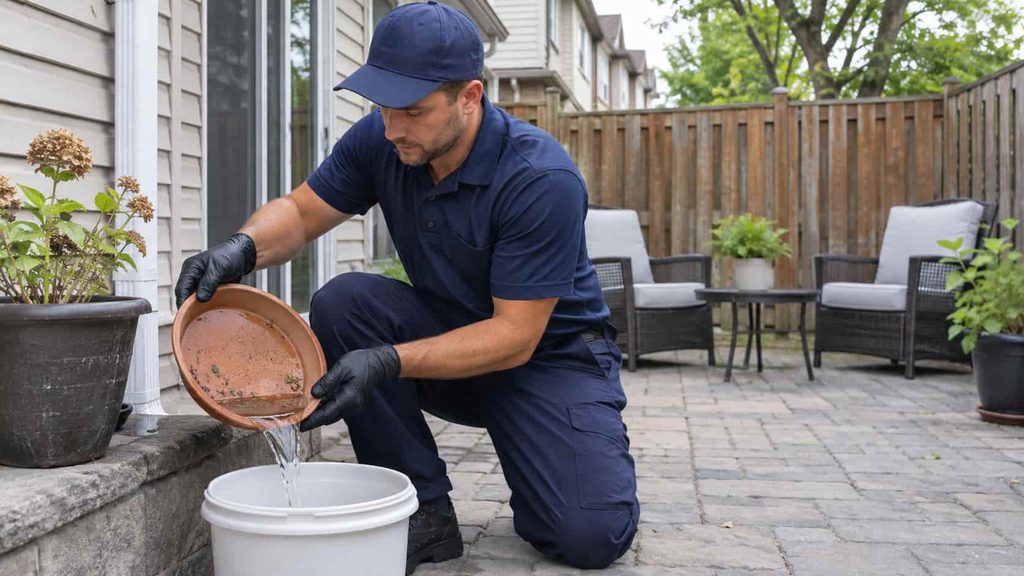
- Bird baths: change the water every two to three days; mosquito larvae can develop in standing water within a week of an egg being laid
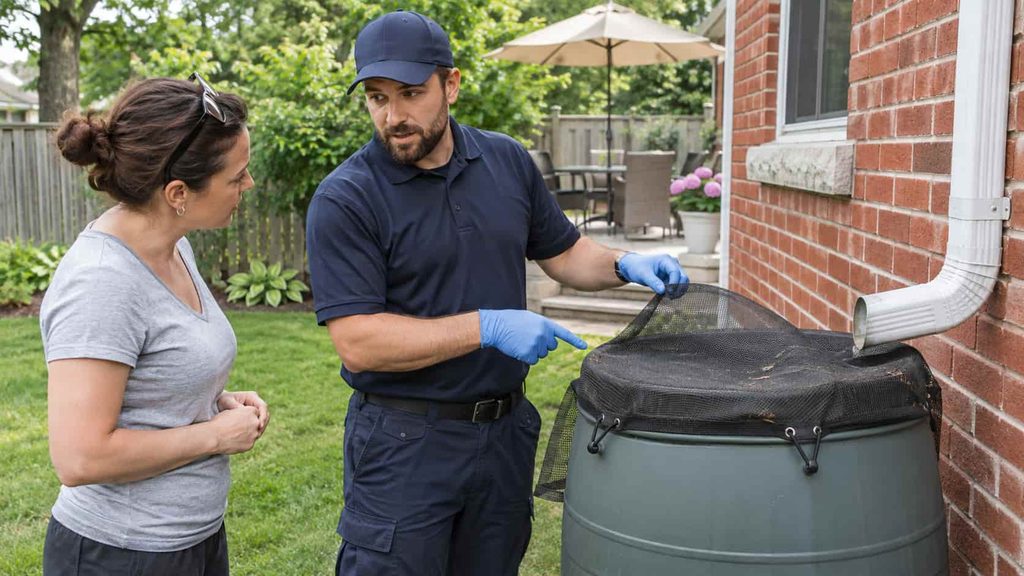
- Rain barrels: fit tight lids or fine mesh screens over all openings; this is a breeding site that many homeowners overlook entirely
- Gutters: a clogged gutter holds water through the entire summer and produces large numbers of mosquitoes season after season
- Ornamental ponds: use a pump to keep water moving, or introduce mosquito-eating fish such as goldfish or native minnows
- Wading pools: empty when not in use; do not leave sitting between uses
- Swimming pools: maintain chlorination and water circulation
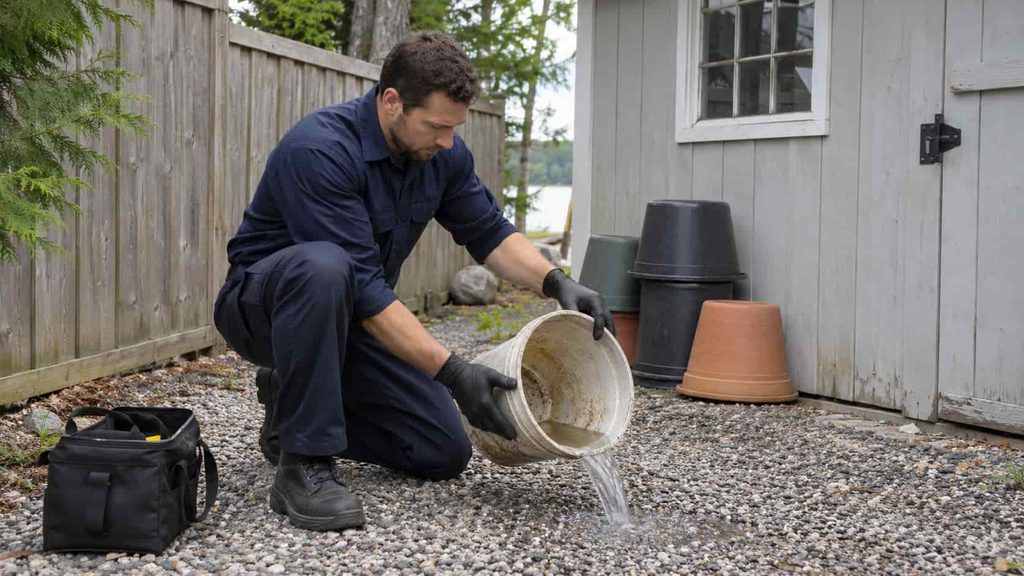
- Containers and low spots: plant saucers, buckets, tarps with depressions, and low areas in lawns all collect enough water for breeding
Systematic inspection of the full property perimeter — particularly after rain — is the most practical single prevention measure a homeowner can take. The standing water does not need to be substantial; a small container holds enough for larvae to complete development.
Personal Protection Measures During Mosquito Season
Culex mosquitoes are most active in the early morning and in the hours around and after dusk. During those periods through Barrie’s mosquito season:
- Apply insect repellent containing DEET to exposed skin; Health Canada approves DEET-based repellents for this use
- Wear protective clothing — long sleeves and long pants — during peak activity hours
- Install or repair window screens to prevent mosquito entry indoors
- Limit prolonged outdoor activity during early morning and evening hours when mosquito pressure is highest
- For more guidance, see the Government of Canada’s West Nile virus prevention advice.
Professional Mosquito Control
A professional assessment identifies breeding sources that routine inspection often misses and determines the appropriate treatment approach for the property.
Professional mosquito control is worth arranging when:
- The property has persistent water features or drainage areas that individual action cannot address
- Adjacent properties contribute breeding conditions that individual yard management cannot offset
- Local surveillance has identified a WNV-positive mosquito pool near the property
- DIY measures have been applied consistently and mosquito pressure remains high through the active season
Frequently Asked Questions
What are the risk factors for severe West Nile virus illness?
Age over 60 and a weakened immune system are the two primary risk factors for developing severe West Nile encephalitis rather than mild West Nile fever or no symptoms at all. People in these groups should take particular care to prevent mosquito bites during Barrie’s mosquito season, avoid early morning and evening outdoor exposure when Culex species are most active, and seek medical attention early if flu-like symptoms develop following outdoor exposure.
How does West Nile virus spread, and can it pass between people?
West Nile virus spreads through the bite of an infected mosquito — primarily Culex species that acquire the virus by feeding on infected birds. No human-to-human transmission through ordinary contact has been documented. In very rare cases, WNV has been transmitted through blood transfusions and organ transplants. Vertical transmission can occur in mosquitoes. Human WNV infections are not contagious between people in the same household or community setting.
What are the mild symptoms of West Nile fever, and when should I see a doctor?
Approximately 20% of people infected with West Nile virus develop West Nile fever — fever, body aches, fatigue, headache, and sometimes a rash. Mild symptoms typically resolve within a few days. See a doctor if symptoms include severe headache, stiff neck, confusion, or muscle weakness — these point toward West Nile encephalitis, a severe neurological illness that requires hospital-level care. If in doubt, contact your physician or visit an emergency room.
How can I prevent West Nile virus on a Barrie property near Lake Simcoe?
Eliminate standing water wherever it collects on the property — gutters, bird baths, rain barrels, ornamental ponds, wading pools, and low spots in the lawn. Apply insect repellent with DEET to exposed skin and wear protective clothing during early morning and evening hours. Install window screens.
Mosquito Control in Barrie: Professional Help When You Need It
If mosquito pressure on your Barrie property is high — particularly near Lake Simcoe, in low-lying areas, or on properties with water features that cannot be fully drained — a professional inspection can identify breeding sites that standard DIY measures miss.
Top Choice Pest Control provides mosquito control services in Barrie and surrounding communities across Ontario. Call (416) 904-5351 or visit Top Choice Pest Control for a free estimate.