You spot it: a grey, papery globe tucked under your eaves, hidden in the corner of your shed, or, worse, buzzing aggressively around a hole in your lawn. That is a wasp nest, and its presence instantly transforms your backyard into a hazard zone.
Attempting nest removal at the wrong time or without proper precautions is extremely dangerous. Wasp stings are painful, and for individuals with allergies, they can be life-threatening. A single aggressive action against a large colony can trigger a swarm, leading to multiple, severe stings.
If your home or business in Toronto, Mississauga, or elsewhere in Ontario is facing a serious infestation from stinging pests, you need a rapid, expert response.
At Top Choice Pest Control, we are your local professional wasp and hornet exterminators. We specialize in safe, targeted wasp nest extermination & Removal and comprehensive residential pest control services. We are here to answer the most critical question: when is it safe to remove a wasp nest? (Spoiler alert: Almost always, the answer is never safely without professional expertise.)
1. Understanding the Seasonal Activity: The “When” of wasp nest extermination
To understand when a wasp nest is least active, we must first understand the seasonal activity of a wasp colony. The danger level of the nest directly correlates with the number of worker wasps present.
Spring: The Beginning (The Safest Time)
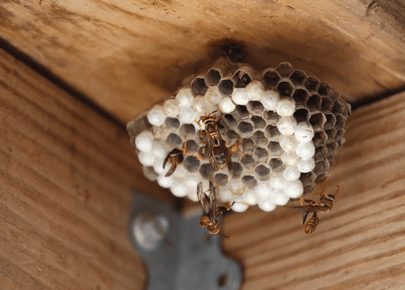
In early spring, a single fertilized queen emerges from hibernation. Her initial task is to build a small, starter nest (often honeycomb-shaped cells covered by a grey envelope) and lay her first batch of larvae.
- Wasp activity is minimal.
- Safety: The nest is the size of a golf ball or walnut, and there is only one worker (the queen). This is theoretically the safest time for removal, but these small nests are incredibly difficult to find.
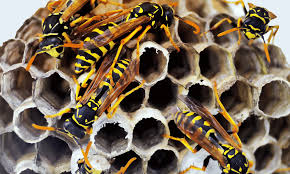
Summer: Rapid Growth (High Danger)
By late spring and early summer, the first worker wasps (sterile females) emerge. The queen now dedicates herself entirely to egg-laying, and the workers take over foraging for food (primarily protein from other insects or carrion for feeding the larvae).
- Colony size explodes (hundreds or thousands of workers).
- Safety: This is when the nest grows fastest. Wasp activity is high, and the colony is highly protective. Wasp stings are common during this time.
Late Summer / Fall: Peak Aggression (Extreme Danger)
In August and September, the colony shifts focus. The workers finish raising the last batch of reproductive larvae (new queens and males) and lose their initial drive for protein. They begin foraging for simple sugar (sweet drinks, fallen fruit) for themselves, making them erratic and incredibly aggressive.
- Wasp activity is at its peak; worker wasps are numerous, highly agitated, and often seen near human outdoor life.
- Safety: This is the most dangerous time to attempt Wasp Nest Removal. The nest may be nearing the size of a basketball (especially for Yellow jackets or Bald-faced hornets), and any disturbance results in an immediate, furious swarm.
The Professional Verdict: For a layperson, there is no safe time to remove an active wasp nest during the summer or fall seasonal activity. Professional wasp nest extermination are required during this period.
2. Identifying the Species: Not All Nests are Equal
Before considering removal, our technicians conduct a thorough nest identification and inspection to determine the species. The danger varies greatly between common species like Vespula (Yellow jackets), Dolichovespula (Bald-faced hornets), and Paper wasps.
- Yellow jackets (Vespula): The most common culprits. They build hidden, massive nests either underground (ground wasp nests) or inside structural cavities like attics and wall voids. These are the most aggressive and difficult to treat due to their hidden nest location.
- Paper Wasps: They build small, open, honeycomb-shaped nests suspended from a single stalk, often under eaves or porch ceilings. They are less aggressive than Yellow jackets unless the nest is directly disturbed.
- European Hornets: Larger, nocturnal, and often build huge Hornet and wasp nests in hollow trees or attics. Their stings are painful, and they can cause property damage by stripping bark from trees.
Distinguishing Wasps from Bees
A critical task is distinguishing Wasps from bees. Honey bees (honeybees) are essential pollinators. If the nest is a true beehive (wax honeycomb filled with honey) and not a papery wasp nest, we recommend safe bee hive removal services and contacting a local beekeeper to relocate the honey bee colony. Top Choice Pest Control focuses on effective wasp nest extermination while respecting the environment and avoiding harm to important pollinator species.
3. The Perils of DIY: Why Businesses Fail to Eliminate Wasps
Attempting DIY Wasp Nest Removal not only risks severe injury from multiple Wasp stings but is often ineffective, leading to a recurring infestation.
Common DIY Mistakes and Dangers
- Improper Timing & Gear: Amateurs often attempt removal during peak daylight Wasp activity without adequate Safety gear, guaranteeing a massive defensive response from hundreds of worker wasps.
- Ineffective Chemical Products: Store-bought Wasp sprays (pesticide cans, aerosol treatments) only kill the worker wasps visible at the entrance. They fail to reach the queen and the larvae deep within the multi-layered nest structure in wall voids or attics.
- Sealing the Nest: A dangerous mistake is sealing the entry hole before treatment. The trapped worker wasps will chew through drywall or ceilings, causing severe property damage and emerging inside your home, turning the entire structure into a hazard zone.
- Misidentification: Treating a protected honey bee colony as a wasp nest can lead to unnecessary bee exterminators calls and environmental harm.
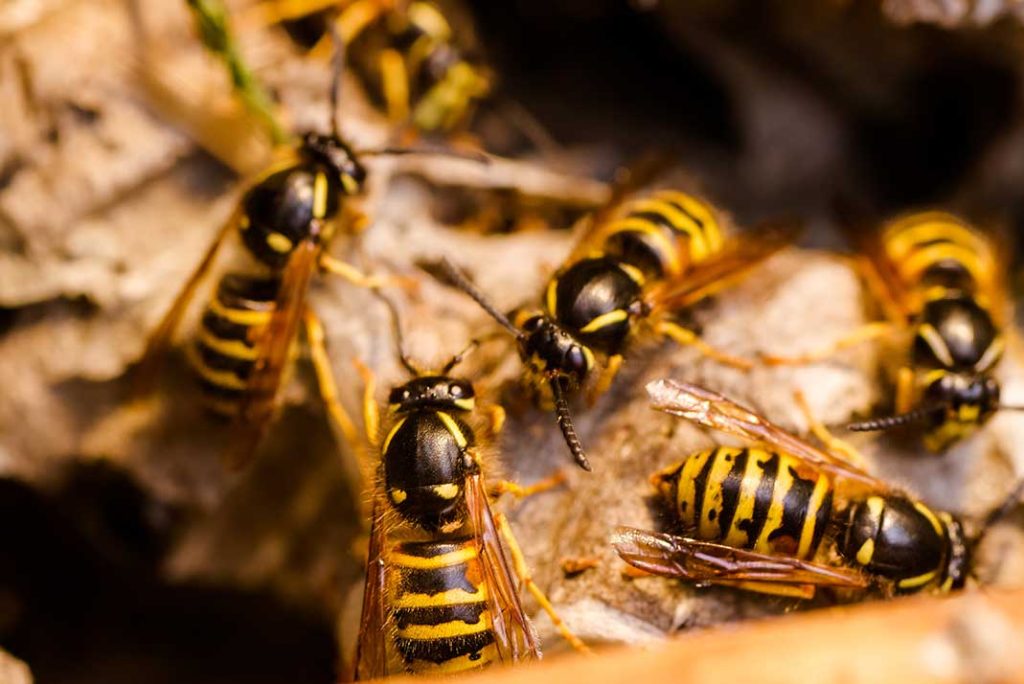
Professional pest control services ensure the entire colony is neutralized safely and legally before removal.
4. The Top Choice Advantage: Safe, Targeted, and Guaranteed Removal
Top Choice Pest Control follows a proven Wasp & Hornet Nest Removal Process that prioritizes safety, efficacy, and environmental compliance, ensuring a chemical + residual kill that is safe for your property.
Our Professional Wasp & Hornet Removal Process
- Inspection & Assessment (Nest Identification): Our licensed technicians conduct a thorough inspection & assessment to identify the wasp species, nest location (ground, aerial, or structural wall voids), and the colony’s size and level of Wasp activity.
- Safe & Targeted Removal: We use specialized Safety gear (full bee suits, professional respirators) and insecticidal dust or environmentally-friendly insecticides applied directly into the nest entrance. This targeted spray application and the use of an insecticidal dust are far more effective than generic chemical sprays, ensuring the workers carry the treatment deep inside to neutralize the queen and larvae.
- Prevention & Follow-Up: Once the colony is dormant, we can safely remove the nest. For internal infestations (like wall voids), we offer exclusion services to prevent future colonization. We back our work with a reliable response and customer service.
- Same-Day & Emergency Wasp Control: We understand the extreme danger posed by these stinging pests. We offer Same-Day & Emergency Wasp Control to address urgent stinging hazards in residential areas and commercial properties.
Our full-service approach utilizes Integrated Pest Management principles and professional-grade insecticides registered by the ministry of environment, ensuring compliance with all pesticide regulation.
5. More Than Just Wasp Extermination: Your Full-Service Pest Partner
When you search for pest control near me for wasp nest extermination, you are also hiring a pest management company equipped to protect your business or home from every threat.
We ensure that our specialized Wasp & Hornet Removal is seamlessly integrated with protection against termites, rodent removal, and preventative wasp nest extermination. Top Choice Pest Control maintains a high standard of customer service and ethical pest management, ensuring Protecting Your Family and your investment year-round.
Conclusion: Don’t Risk a Sting—Call the Experts
Understanding when is it safe to remove a wasp nest comes down to recognizing that the greatest danger is attempting the task yourself during peak summer and fall months. Professional wasp nest extermination exterminator have the expertise, Safety gear, and powerful, targeted treatments (insecticides) to eliminate the entire colony quickly and safely.
Don’t let aggressive Wasps ruin your outdoor life or compromise your safety. Ready to eliminate the stinging hazards from your property?
Protect your home and business today—book a free pest inspection with Top Choice Pest Control, your local experts in Toronto, Ontario, and across Canada!