What are Pharaoh ants? Many homeowners and business owners ask this question after noticing tiny ants moving along walls, countertops, and food storage areas. Pharaoh ants may look harmless because of their small size, but they can become a major pest problem when left untreated. A pharaoh ant infestation often spreads throughout a building and becomes difficult to control. These ants can contaminate food, spread bacteria, and establish multiple colonies in hidden areas. Understanding how pharaoh ants behave, where they nest, and why professional pest control is important can help protect your property from a growing infestation.
Understanding Pharaoh Ants
Pharaoh ants are a small ant species that thrive indoors. Unlike many other ant species, they depend on warm environments and often survive inside heated buildings throughout the year.
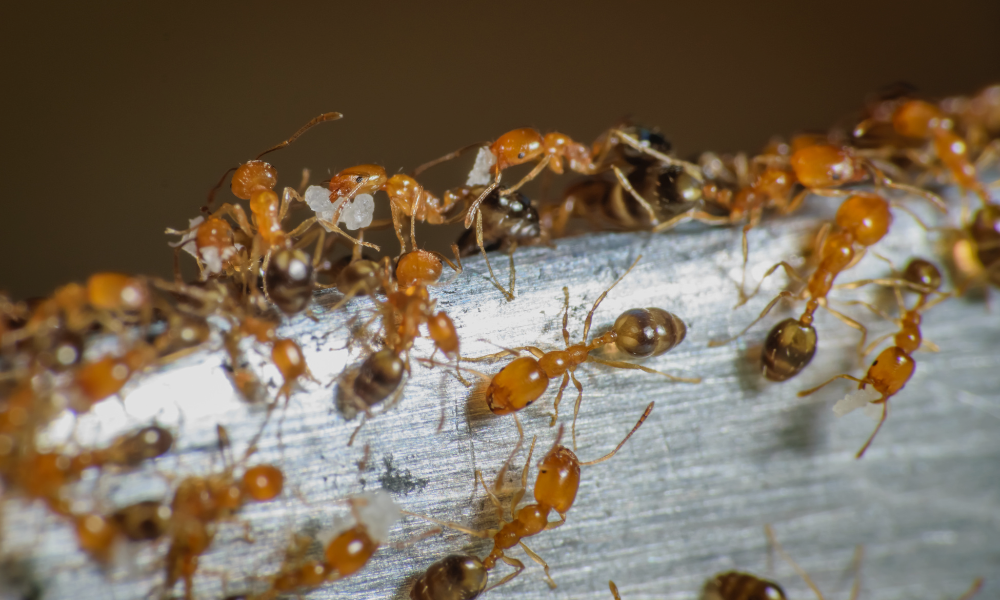
Pharaoh ants are known for their light brown or yellowish appearance. Worker ants measure only a few millimeters in length. Most workers have a light brown body with a slightly darker abdomen. The darker abdomen often helps distinguish them from some other ants.
Because of their tiny size, pharaoh ants found inside homes or businesses can enter through very small openings. They travel along walls, pipes, electrical wires, and hidden spaces while searching for food and water.
What Does a Pharaoh Ant Colony Look Like?
A pharaoh ant colony differs from many other ants because it contains multiple queens. While many ant species depend on a single queen, pharaoh ant queens often number in the dozens.
A colony may contain worker ants, larvae, eggs, queens, and winged reproductives. The presence of several queens allows colonies to grow quickly and establish new nests throughout a structure.
When conditions change or colonies feel threatened, groups of workers and queens can leave the original colony and create satellite nests. This process helps explain why infestations spread rapidly inside apartment buildings, office buildings, grocery stores, healthcare facilities, and residential properties.
Where Pharaoh Ants Nest
Pharaoh ants prefer warm, protected spaces close to food sources and moisture. They often seek moisture and shelter inside wall voids, behind cabinets, inside furniture, around pipes, and near electrical wires.
Because they create hidden nests, infestations may go unnoticed for long periods. Property owners often see workers foraging for food long before they discover the actual nest.
Pharaoh ants found indoors commonly establish multiple colonies throughout a building. These colonies may connect through a network of satellite nests that makes treatment more challenging.
Signs of a Pharaoh Ant Infestation
One of the most common signs of a pharaoh ant infestation is seeing tiny ants traveling in trails across floors, counters, or walls.
Workers frequently forage near kitchens, break rooms, food storage areas, pet food bowls, and garbage containers. These ants feed on a wide range of food sources, including proteins, sweets, oils, and organic materials.
Because colonies often contain several queens, ant activity may appear in different areas of the same building at the same time. Seeing workers near multiple rooms often indicates a larger infestation hidden inside the structure.
The appearance of winged reproductives may also suggest that the colony has matured and is producing new queens and reproductive ants.
Why Pharaoh Ants Are a Concern
Many people assume tiny ants create only a nuisance. However, pharaoh ants present additional concerns.
Pharaoh ants can contaminate food by traveling through unsanitary locations before entering kitchens and food preparation areas. These insects have been associated with bacteria such as Salmonella and Streptococcus pyogenes.
Because pharaoh ants move through healthcare facilities, apartment buildings, office buildings, and commercial spaces, they may contribute to sanitation concerns when infestations become widespread.
Their ability to establish multiple colonies also makes them harder to eliminate than many other species.
Why DIY Treatments Often Make Things Worse
Many property owners attempt to get rid of pharaoh ants using sprays and regular ant traps. Unfortunately, these methods often make the infestation worse.
When colonies detect danger, they may split apart through a process called budding. Instead of eliminating the colony, a spray treatment can cause workers, queens, and larvae to relocate and create new colonies elsewhere.
This means a single infestation can quickly turn into several infestations throughout the building.
For this reason, professional pest control specialists often avoid relying on spray products alone when dealing with pharaoh ants.
Pest Control Near Me
Many property owners search for pest control near me after repeated ant sightings. Professional pest control services provide the most effective control strategy for pharaoh ants.
Experienced technicians identify nesting locations, determine colony size, and locate satellite nests hidden inside walls and structural voids. They also evaluate food sources, moisture issues, and entry points contributing to the infestation.
A professional inspection allows technicians to create a treatment plan that addresses the entire colony rather than only visible ants.
How Professionals Eliminate Pharaoh Ants
Professional pest control focuses on ant colony elimination rather than surface treatment. Ant bait products play a critical role in treatment.
Workers consume bait and carry it back to the nest where it reaches queens, larvae, and other members of the colony. This process helps eliminate pharaoh ants at the source.
Unlike regular ant traps, professional baiting programs target hidden colonies and reduce the risk of colony splitting.
Depending on the size of the infestation, technicians may monitor activity and adjust treatment strategies over time to achieve complete removal.
Preventing Pharaoh Ant Infestations
Prevention starts with reducing access to food and water. Store food in airtight containers and clean spills immediately. Keep pet food sealed when not in use.
Repair leaks and eliminate moisture sources where ants seek moisture. Regular inspections of kitchens, utility rooms, and storage spaces can help identify activity early.
Although prevention helps reduce risk, established infestations often require professional treatment because colonies remain hidden inside walls and structural voids.
Why Choose Top Choice Pest Control
Top Choice Pest Control provides professional pest control services for homeowners and businesses dealing with pharaoh ants and other pests.
Their licensed technicians understand the behavior of pharaoh ant queens, worker ants, and satellite nests. They use proven treatment methods that focus on complete removal rather than temporary relief.
The team performs detailed inspections, identifies hidden colonies, and develops treatment plans tailored to each infestation. Their fast response times, safe products, and commitment to customer satisfaction help property owners regain control of their space.
Whether the infestation occurs in a house, apartment building, office building, or commercial facility, Top Choice Pest Control provides solutions designed for lasting results.

FAQs
What are pharaoh ants and why are they difficult to control?
Pharaoh ants are tiny indoor ants that live in large colonies containing multiple queens. A pharaoh ant infestation becomes difficult to control because colonies often split into new groups when disturbed. This behavior allows them to spread throughout a building and establish multiple nesting locations that require professional pest control treatment.
How do professionals eliminate pharaoh ants?
Professionals eliminate pharaoh ants by using specialized ant bait products instead of relying on sprays. Worker ants carry the bait back to the colony where queens and larvae consume it. This approach targets the entire colony and helps eliminate pharaoh ants more effectively than many DIY methods.
Can I get rid of pharaoh ants myself?
Many homeowners attempt to rid of pharaoh ants using sprays and regular ant traps. Unfortunately, these treatments often cause colonies to divide and create new nests. To get rid of pharaoh ants successfully, most infestations require professional treatment that targets hidden colonies and multiple queens.
How are pharaoh ants different from carpenter ants?
Carpenter ants are much larger and often nest in wood. Pharaoh ants are tiny, light brown ants that prefer warm indoor environments. Unlike carpenter ants, pharaoh ants commonly establish multiple colonies and contain several queens. Their nesting behavior and treatment requirements differ significantly from other ant species.
Where are pharaoh ants found most often?
Pharaoh ants found indoors usually nest in wall voids, heated buildings, apartment complexes, office buildings, healthcare facilities, and grocery stores. They seek food, moisture, and protected nesting areas. Because they live in hidden locations, infestations often remain unnoticed until workers begin foraging throughout the building.
Conclusion
Pharaoh ants may be small, but they can create significant problems for homes and businesses. Their ability to form multiple colonies, establish satellite nests, contaminate food, and spread throughout a building makes them one of the more challenging ant pests to manage.
Early detection and professional pest control remain the most effective ways to eliminate colonies and prevent infestations from spreading.
Schedule Your Pharaoh Ant Inspection Today
If you have noticed tiny ants in your home, office, apartment building, or commercial property, contact Top Choice Pest Control today. Their experienced team can inspect the property, identify nesting locations, and create a treatment plan designed to eliminate the entire colony. Schedule your inspection today and take the first step toward lasting pharaoh ants, thief ants, carpenter ants, worker ants, and all other species of ant control.