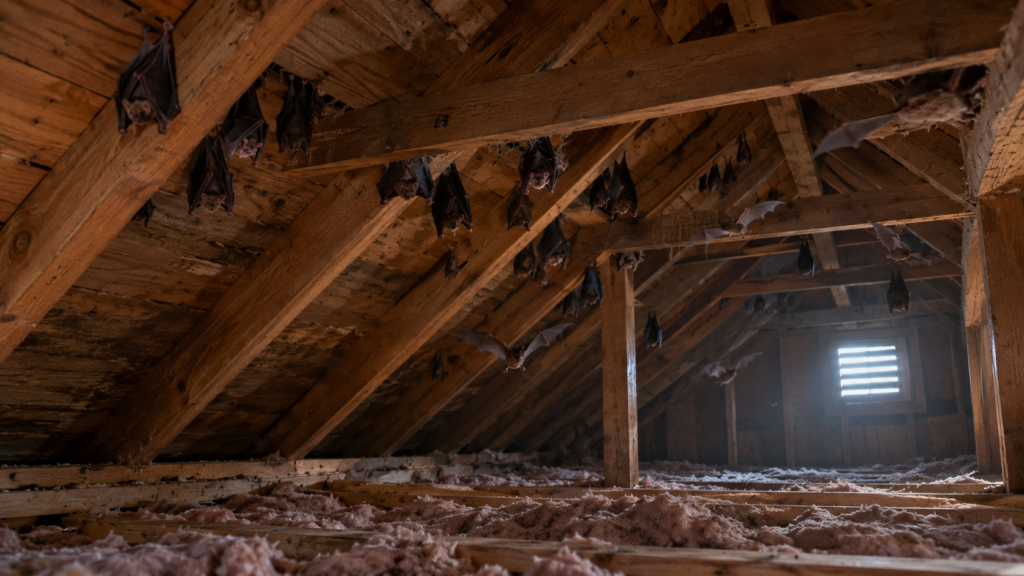
Bats in attic are a protected wildlife matter in Ontario — the removal method, timing, and cleanup all carry legal and health implications that make this different from a standard pest problem. If you have found signs of bats in your attic, or watched bats emerge from a gap in your roofline at dusk, do not seal the opening until you have confirmed no pups are present. This guide covers how to identify a bat infestation, what health risks follow from guano exposure, why maternity season changes the entire removal timeline, and how professional bat exclusion works in Barrie and across Ontario. It is for homeowners dealing with an active or suspected bat colony.
Key Takeaways
- The little brown bat (Myotis lucifugus) is listed as Endangered under Ontario’s Endangered Species Act, 2007, making it illegal to harm, kill, or disturb bats or their roosts.
- Bat guano can harbour Histoplasma capsulatum, the fungus responsible for histoplasmosis, a respiratory illness that causes fever, chest pain, and in serious cases significant lung complications.
- Maternity season in Ontario runs from May through early August; conducting bat exclusion during this window can trap non-flying pups inside the attic, which causes a serious decomposition problem and harms legally protected animals.
- Bats can enter through gaps as small as 5/16 of an inch — smaller than a pen cap — making a full perimeter inspection essential before any sealing begins.
- The recommended exclusion window in Ontario is mid-August through late October, before bats enter hibernation in November.
Why Bats Move Into Attics in Ontario
Attics replicate the conditions bats need in natural roosts: warmth, darkness, structural crevices, and protection from weather and predators. In the wild, bats roost in hollow trees, rock crevices, and under bark. In residential Barrie, attics, soffits, and wall voids serve the same function.
Two bat species account for most attic infestations in Ontario: the little brown bat (Myotis lucifugus) and the big brown bat (Eptesicus fuscus). Both are insectivorous, highly effective at controlling mosquito and insect populations, and legally protected under provincial law.
Bats do not gnaw their way into a structure the way rodents do. They find and use existing gaps — cracked fascia boards, open gable vents, deteriorating soffit panels, gaps where rooflines meet brick or siding, and uncapped chimneys. Once a colony establishes a roost, bats return to the same site year after year. A colony of 30 or 40 bats occupying an attic in a given summer may trace back to a single female who first found the gap several seasons earlier. Colony size grows gradually as offspring return to their birth roost each spring.
Signs of Bats in Your Attic
Bat activity is usually noticed through sound and smell before any bat is seen directly.
Scratching and squeaking sounds at dusk and dawn: Bats leave the roost to hunt at dusk and return before dawn. Shuffling, scratching, and high-pitched squeaking in the attic during the hour around sunset and sunrise are consistent with bat activity. Sounds are most obvious on warm evenings when the colony is active.
Oily dark stains around entry points: Bats leave greasy rub marks — oily streaks of fur oils and guano residue — around the gaps they use regularly. Look for dark staining on fascia boards, soffits, gable vents, and window sills near the roofline. These marks build up over multiple seasons at the same entry point and are one of the most reliable indicators of an established roost.
Bat droppings below entry points and inside the attic: Bat guano appears as small, dark, pellet-shaped droppings similar in size to mouse droppings, but with a key difference: bat droppings crumble easily into a fine powder, while mouse droppings remain firm. Guano accumulates directly beneath entry points on the ground outside and inside the attic on insulation and structural surfaces.
Strong ammonia odour: Bat urine produces a sharp, persistent ammonia smell. As a colony grows and guano accumulates over multiple seasons, the odour can penetrate the attic structure and in some cases reach living spaces, particularly during warm weather when the attic heats up.
Bats emerging from the roofline at dusk: Watching the roofline at dusk from a distance — particularly on a warm summer evening — and observing bats emerging from a specific gap or vent is direct confirmation of an active roost. A single bat found inside the living space is more likely a young bat that has lost its way than evidence of a large colony, but it warrants an attic inspection.
Health Risks from Bats and Bat Guano
Histoplasmosis
Bat guano can harbour Histoplasma capsulatum, a fungal organism that releases spores when dried droppings are disturbed. Inhaling these spores can cause histoplasmosis, a respiratory disease with symptoms including fever, fatigue, and chest pain. Most healthy adults recover without treatment, but immunocompromised individuals and those with significant exposure can develop severe lung complications requiring medical intervention.
The primary exposure risk occurs during attic entry or cleanup. Dry sweeping or standard vacuuming disperses spores into the air. The correct approach involves dampening guano with a disinfectant solution before removal, using a P100 respirator, disposable coveralls, and gloves as minimum protective equipment.
Rabies
Bats are the most common source of human rabies in Canada. Direct contact — a bite or scratch, or contact with bat saliva on broken skin or mucous membranes — carries a transmission risk. Bat bites can be small enough to go unnoticed. Finding a bat in a room where someone was sleeping, or any direct contact with a bat, warrants immediate medical evaluation for potential post-exposure prophylaxis.
Bats behaving abnormally — found on the ground, active in daylight, or approachable — should not be handled. Contact your local public health unit or animal services in those situations.
Bat Bugs
Bat bugs (Cimex adjunctus) are parasites closely related to bed bugs. They live in bat roosts and feed primarily on bat blood. When bats are excluded from an attic, bat bugs can migrate down through wall voids and into living spaces, where they will bite humans. Bat bug infestations are a recognized secondary consequence of bat colonies and are one reason thorough post-exclusion cleanup is not optional.
Ontario’s Legal Protections for Bats
Bats in Ontario are protected under the Fish and Wildlife Conservation Act, 1997, which prohibits harming, killing, or trapping them without authorization. The little brown bat carries additional protection as an Endangered species under the Endangered Species Act, 2007, due to severe population losses caused by white-nose syndrome — a fungal disease detected in Ontario in 2010 that has killed millions of bats across eastern North America.
It is illegal to harm or kill bats in Ontario regardless of where they are found. Exclusion work that traps or kills pups — particularly when non-flying pups are present during maternity season — violates provincial wildlife law and can result in fines. Licensed wildlife operators conduct bat removal within these constraints, using methods that allow bats to exit voluntarily and safely before entry points are sealed.
Maternity Season: Why Timing Is the Central Problem
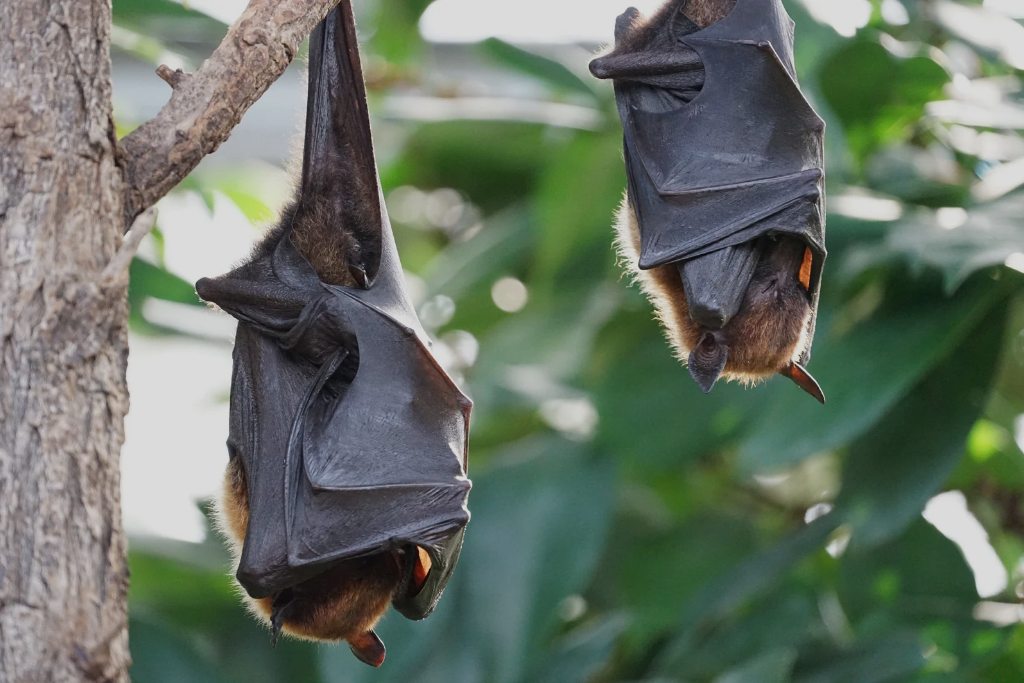
Maternity season for bats in Ontario runs from May through early August. Female bats arrive in spring and give birth to a single pup in late June or early July. Pups are born without the ability to fly and spend their first weeks clinging to the roost structure. They do not typically fly independently until mid-August.
Conducting bat exclusion while non-flying pups are present traps them inside the attic. Pups that cannot exit the roost die, creating a decomposition and sanitation problem on top of the existing bat infestation. Exclusion during this period is inhumane and harms a legally protected species.
If bats are discovered during maternity season — which is common, since colony size is at its peak and odour and sounds are most noticeable in summer — the recommended response is to document the entry points and plan for exclusion once pups are flying. A licensed wildlife operator can inspect the roost during this period, identify all active entry points, and schedule the work for mid-August or later.
The recommended exclusion window in Ontario runs from mid-August, once pups are confirmed flying, through late October before bats enter hibernation in November. A licensed operator can assess whether the attic is being used as a hibernation site or a summer maternity roost and schedule exclusion accordingly.
How Bat Removal Works
What Not to Do
Sealing entry points while bats are present is the most common and consequential DIY mistake. Bats trapped inside will search for alternative exits — often into living spaces through light fixtures, gaps around pipes, or openings in the ceiling. Handling bats without proper protective equipment carries a real rabies exposure risk.
Repellents, bright lights, and ultrasonic devices do not reliably evict an established colony. These approaches may temporarily displace bats from one area of the attic without addressing the entry points, and do not prevent re-entry.
Professional Bat Exclusion
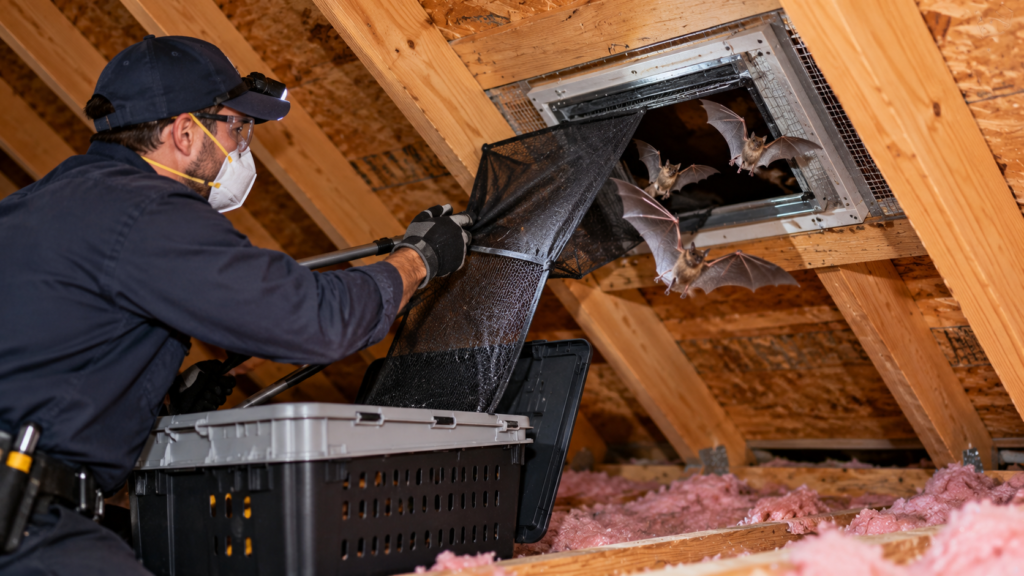
Professional bat exclusion begins with a full perimeter inspection to identify every active entry point. A single visible opening is rarely the only one — bats use multiple gaps, and sealing the obvious entry without finding the secondary openings simply redirects the colony.
Once all active entry points are mapped, one-way exclusion devices — bat valves or flexible plastic tubes — are installed over the primary openings. These allow bats to exit at dusk but prevent re-entry. Secondary openings are sealed during the same visit using caulk, galvanized hardware cloth, or foam board. The exclusion devices remain in place for three to seven nights until the colony has exited, then the final openings are sealed permanently.
Top Choice Pest Control offers a free inspection for bat issues in Barrie and surrounding communities. Call (416) 904-5351 or visit the wildlife removal page to book — a written quote follows the inspection.
Cleanup After Bat Removal
Cleanup is a separate process from exclusion and should not be skipped. Accumulated guano in attic insulation harbours fungal spores and produces persistent odour. Insulation saturated with guano or urine typically requires full replacement — the material cannot be reliably decontaminated in place.
Attic entry for cleanup requires a P100 respirator, disposable coveralls, gloves, and eye protection. The attic should be ventilated before entry. Droppings must be dampened with a disinfectant solution and carefully bagged — dry sweeping or standard vacuuming without HEPA filtration releases spores. Any bat bugs present in the roost area should be addressed to prevent migration into living spaces.
For any attic with significant guano accumulation, professional cleanup is the advisable approach. Disturbing large deposits without correct technique and equipment is the primary health risk in a bat-affected attic. Ask your wildlife removal operator whether cleanup and insulation replacement are part of their service, or whether a separate contractor is needed.
Preventing Bats from Returning
After exclusion and cleanup are complete, maintaining the seal is the primary prevention measure. Bats are creatures of habit and attempt to return to the same roost site each spring. Any gap that reopens through weathering, freeze-thaw cycles, or general wear is a potential re-entry point.
Annual roofline inspection: Check fascia boards, soffits, gable vents, and any area where different materials meet at the roofline each spring, before maternity season begins in May. Any new gap larger than 5/16 of an inch should be sealed before bats arrive.
Chimney cap: Open or uncapped chimneys are common bat entry points. A properly fitted chimney cap with a mesh guard prevents bat access without restricting airflow or affecting chimney function.
Bat house: Installing a bat house on the property — away from the main structure, at a height of 4 to 5 metres — gives displaced bats an alternative roost. Bats excluded from an attic will seek a new roost nearby; a bat house directs that activity away from the home.
Frequently Asked Questions – Bats in Attic
What are the signs of bats in your attic?
Scratching or squeaking sounds in the attic at dusk or dawn, dark oily stains around gaps in the roofline or soffits, small dark droppings that crumble to powder near the base of the structure, and a strong ammonia smell from the attic. Watching the roofline at dusk and seeing bats emerge from a specific point confirms an active roost.
Is bat removal recommended during the summer in Ontario?
Bat exclusion is strongly discouraged during Ontario’s maternity season, which runs from May through early August. During this period, female bats have non-flying pups in the roost. Sealing entry points or installing one-way exclusion devices while pups cannot exit traps them inside, which harms legally protected animals and violates the Fish and Wildlife Conservation Act and the Endangered Species Act, 2007. The recommended exclusion window is mid-August through late October.
What does bat guano look like, and is bat guano dangerous?
Bat droppings are small, dark, and pellet-shaped — similar in appearance to mouse droppings but with one key difference: bat droppings crumble to a fine powder when crushed, while mouse droppings remain firm. Accumulated bat guano is a health risk because dried droppings can harbour Histoplasma capsulatum spores, which cause histoplasmosis when inhaled. Entering an attic with significant guano accumulation requires a P100 respirator and full protective equipment.
What is the bat removal process for an attic infestation?
A licensed wildlife operator inspects the full perimeter to identify all active entry points, not just the obvious ones. One-way exclusion devices are installed over primary openings, allowing bats to exit at dusk but not return. Secondary openings are sealed during the same visit. The devices stay in place for three to seven nights until all bats have exited, then the final openings are sealed. Cleanup — removing guano and replacing contaminated insulation — follows as a separate step.
Book Bat Removal in Barrie With Top Choice Pest Control
If you have found signs of a bat infestation in your attic — or watched bats emerge from a gap in your roofline at dusk — contact Top Choice Pest Control for an inspection. Top Choice serves Barrie, Vaughan, North York, and surrounding communities across Ontario with licensed wildlife removal services.
Call (416) 904-5351 or visit Top Choice wildlife removal in Barrie to book a free inspection.