Carpenter bee control starts with understanding what carpenter bees are and why they can become a problem. Carpenter bees are large bees that tunnel into wood to build nests. Unlike bumble bees, they do not live in colonies. They are solitary insects that create individual nests in wooden structures around homes and businesses. While these common bees help pollinate plants, a carpenter bee infestation can lead to structural damage when the insects repeatedly bore holes into wood.
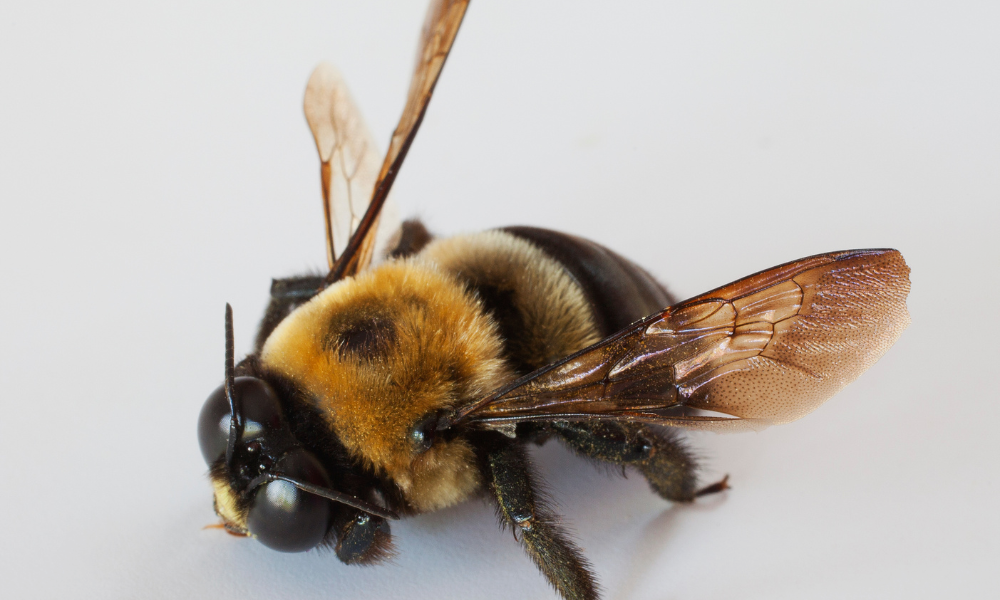
Many property owners mistake carpenter bees for bumble bees because both are large bees. However, there are important differences. Eastern carpenter bees often have shiny black abdomens and lack yellow markings found on many bumble bees. Understanding their nesting habits can help property owners identify early damage and take action before bee infestations grow.
Understanding Carpenter Bees
Carpenter bees do not eat wood. Instead, carpenter bees bore into wood to create nesting galleries where they raise their young. Female carpenter bees excavate tunnels by chewing wood and pushing out chewed wooden pulp. The female creates tunnels in bare wood, worn wood, soft wood, fascia boards, decks, fences, and other exposed wood surfaces.
The female lays eggs inside the tunnel. Each gallery cell contains stored limited pollen and regurgitated nectar that feeds developing carpenter bees. The female lays a single egg in each section before sealing it. Large larvae developing inside the tunnel mature into adult carpenter bees.
There are seven different species of carpenter bees found across North America. Eastern carpenter bees are among the most common. Female valley carpenter bees and other species share similar nesting habits. Adult carpenter bees overwinter inside existing holes and galleries. Many people refer to this as adult carpenter bees hibernate, although overwintering bees remain sheltered within wood until warmer temperatures return.
Signs of a Carpenter Bee Infestation
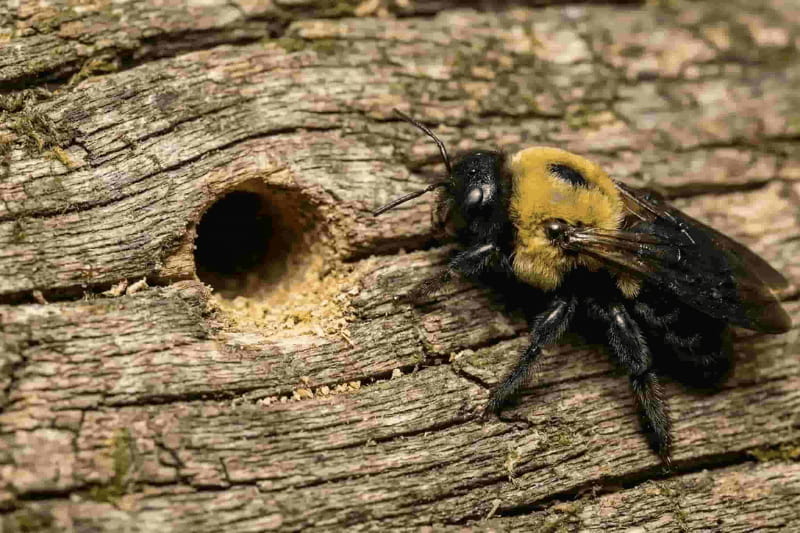
A carpenter bee infestation often starts with a few drilling circular holes in wood. These circular holes are usually smooth holes about the size of a fingertip. Property owners may notice hovering bees around decks, railings, eaves, or fascia boards. To identify early damage to buildings, homeowners should regularly inspect the perimeter of the home and surrounding property for the presence of these holes and hovering bees.
Fresh sawdust-like material below the holes is another sign. This material comes from chewed wooden pulp removed while carpenter bees excavate tunnels. Over time, abandoned nest tunnels may remain inside the wood. New generations may reuse these long but reused galleries year after year.
You may also notice male carpenter bees hover closely around people near nesting sites. Male carpenter bees often appear aggressive, but they do not sting. Their behavior can create unnecessary fear for homeowners and visitors.
Dangers of Ignoring Carpenter Bee Activity
Many people assume carpenter bees are harmless because they help pollinate flowers and trees outdoors. While they are valuable pollinators, a growing carpenter bee infestation can become a serious property threat.
When carpenter bees repeatedly bore holes into the same wood, tunnels expand over time. Multiple generations may use an already existing gallery or create new chambers nearby. This process weakens wooden structures and can result in structural damage.
Moisture can enter through existing holes and increase wood deterioration. Birds may also peck at infested wood while searching for large larvae. This activity can make damage worse. What begins as a few circular holes can become a costly repair if left untreated.
Do Carpenter Bees Sting?
Many homeowners ask whether carpenter bees sting. The answer depends on the bee. Male carpenter bees cannot sting. They may hover closely and defend nesting areas, but they pose little risk.
Female carpenter bees sting because they have stingers. However, female carpenter bees sting only when threatened or handled. Female carpenter bees sting on very rare occasions. Most people never experience a sting from these insects.
Because female carpenter bees sting only in rare occasions, homeowners should avoid panic. Understanding bee behavior helps reduce unnecessary fear and supports informed decisions about proper bee control.
Pest Control Near Me: Why Professional Help Matters
Many people search for pest control near me after finding carpenter bees around their property. While DIY products exist, they often fail to address the full problem.
Sprays may kill visible bees but leave tunnels untreated. Developing carpenter bees inside galleries can survive and emerge later. Property owners may get rid of carpenter activity temporarily without solving the root issue.
Professional pest control services inspect all nesting sites, identify activity levels, and select the appropriate treatment method. Experts know where carpenter bees prefer hardwood and where they target soft wood. They also understand how to treat active galleries and prevent future nesting.
A complete carpenter bee removal plan includes treatment, monitoring, and exclusion measures. This approach helps property owners rid of carpenter bees and reduce the risk of recurring infestations.
Termite Treatment and Carpenter Bee Identification
Carpenter bee damage often causes confusion because some homeowners mistake it for termite activity. Termites eat wood and live as social insects. Carpenter bees do not eat wood and live as solitary insects.
Termite treatment targets colonies that consume structural materials. Carpenter bee control focuses on treating nesting galleries and preventing future nesting. Proper identification is essential because each pest requires a different treatment strategy.
Since carpenter bees prefer bare wood, painting and staining wood can sometimes help deter them. However, they will occasionally attack stained or painted wood. To avoid carpenter bees and prevent them from entering the home, seal cracks and crevices along the property’s foundation and walls with a silicone sealant.
A licensed pest control professional can identify the pest accurately and recommend the right solution.
Rodent Removal and Other Pest Concerns
Property owners dealing with carpenter bees often face other pest issues as well. Rodent removal services help manage mice and rats that damage insulation, wiring, and stored materials. Carpenter ants may also invade damaged wood. Unlike carpenter bees, carpenter ants form colonies and expand their nests through interconnected tunnels.
A comprehensive pest control inspection helps identify all active pest problems and protects the property from multiple threats.
Bed Bug Extermination and Full-Service Pest Control
Many pest control companies provide services beyond carpenter bee removal. Bed bug extermination, termite treatment, rodent removal, and cockroach management often form part of a complete protection plan.
When choosing a provider, look for licensed experts who use safe products and proven methods. Quick response times and thorough inspections help prevent small problems from becoming major infestations.
Why Choose Top Choice Pest Control
Top Choice Pest Control provides professional carpenter bee control for residential and commercial properties. Their licensed experts understand bee behavior, nesting patterns, and treatment options. The team performs detailed inspections to identify active galleries, locate hidden nesting areas, and recommend the appropriate treatment method.
Top Choice Pest Control uses safe products and proven techniques to protect wooden structures while minimizing disruption. Their fast response, experience, and commitment to customer service help property owners address carpenter bee infestations before they lead to costly repairs.
FAQs
What is the best carpenter bee control method?
The best carpenter bee control method combines inspection, treatment, and prevention. Professionals identify active galleries, treat nesting sites, and seal vulnerable areas. This approach addresses current activity and helps prevent future carpenter bees from returning. DIY methods often provide short-term results but may not eliminate hidden developing bees inside tunnels.
How can I tell carpenter bees from bumble bees?
Carpenter bees and bumble bees look similar, but carpenter bees usually have shiny black abdomens that lack yellow markings. Bumble bees often have fuzzy yellow abdomens. Carpenter bees also create smooth circular holes in wood, while bumble bees nest in the ground or sheltered locations rather than drilling into wooden surfaces. Eastern carpenter bees, for example, are the kind that strongly emulate the appearance of bumble bees, with sleek, black bodies and a patch of yellow hair on their thorax.
Are eastern carpenter bees dangerous?
Eastern carpenter bees rarely pose a direct threat to people. Male bees cannot sting, and female carpenter bees sting only when threatened. The main concern is property damage. Repeated tunneling and nesting can weaken wood over time, making professional carpenter bee removal important when activity becomes widespread.
What is the fastest way to get rid of carpenter bees?
The fastest way to get rid of carpenter activity is through professional pest control. Experts locate active nests, apply targeted treatments, and recommend exclusion methods. Professional services address hidden galleries and developing bees, reducing the chance of future infestations and repeated damage to wooden structures.
When should I call pest control for carpenter bees?
You should contact pest control when you notice circular holes, hovering bees, sawdust-like debris, or recurring bee activity around wood. Early treatment helps prevent structural damage and reduces repair costs. A professional inspection can confirm whether carpenter bees are present and determine the most effective treatment plan.
Conclusion
Carpenter bees play an important role in pollination, but they can become a problem when they nest in homes and commercial buildings. Their tunnels may weaken wood, attract other pests, and lead to costly repairs. Understanding their behavior, recognizing early warning signs, and acting quickly can help protect your property.
Schedule Your Carpenter Bee Inspection Today
If you have noticed carpenter bees, circular holes, or signs of wood damage, do not wait for the problem to grow. Contact Top Choice Pest Control today for a professional inspection and customized carpenter bee control plan. Their experienced team can identify the source of the infestation, protect your property, and help prevent future damage.