TOP CHOICE PEST CONTROL | BARRIE, ONTARIO
Key Takeaways
✔ All three are small flying insects — but each breeds in a different location and requires a different fix.
✔ Fruit flies breed in overripe fruit, garbage, and drains. Adults measure 1/8 to 1/16 of an inch with red eyes.
✔ Drain flies breed exclusively in the organic buildup inside drains and pipes — cleaning the drain is the fix.
✔ Fungus gnats breed in moist soil of houseplants. Larvae damage roots and kill young plants.
✔ The fruit fly life cycle from egg to adult can take as little as 8 to 10 days — act fast.
✔ Sanitation and removing breeding sites — not sprays — are the effective solution for all three.
Introduction
Fruit flies, drain flies, and fungus gnats are three of the most common household pests in Canadian homes — and they are frequently confused with each other. All three are small, low-flying insects attracted to moisture and organic matter. All three invade homes and breed indoors, but each breeds in a completely different location. Getting rid of each species requires correct identification first. The life cycle, breeding site, food source, and fix are different for each. Applying the wrong treatment wastes time and lets the infestation grow. This guide helps property owners identify each insect and apply the right fix.
Fruit Flies: Identification, Life Cycle, and Control
Fruit flies are tiny pests in the Drosophilidae family.
Identifying Fruit Flies
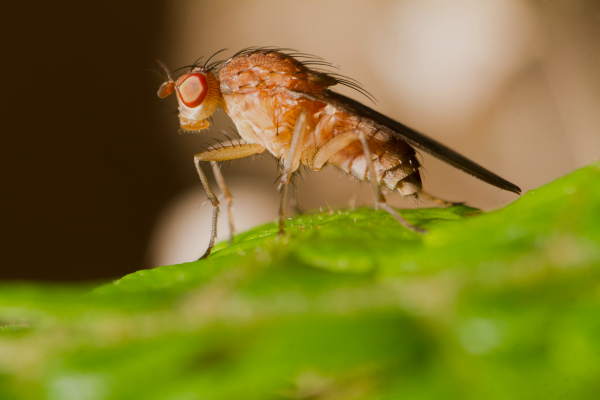
Adult fruit flies measure about 1/8 to 1/16 of an inch long — red eyes, tan body, slow hovering mating flight. They congregate around fruit bowls and garbage bins.
Fruit flies are attracted to overripe produce, fermenting food, and warm temperatures. They are a warm-season pest in Canada, peaking through late spring and summer.
The Fruit Fly Life Cycle
The fruit fly life cycle from egg to adult takes as little as 8 to 10 days. Females lay up to 500 eggs on fermenting food surfaces. Larvae hatch and feed before pupating. The colony grows rapidly — a few adults become a full infestation within days. Eliminating breeding sites is the only effective long-term solution.
Where Fruit Flies Breed
Breeding locations include overripe fruit, garbage disposals, compost bins, and drain residue. Rinsing recyclables and cleaning surfaces removes breeding sites. A thin fermenting film sustains larvae.
How to Get Rid of Fruit Flies
Remove overripe produce. Clean drains and surfaces. Apple cider vinegar with dish soap traps adults — but only addressing the breeding source eliminates the infestation.
Drain Flies: Identification, Life Cycle, and Control
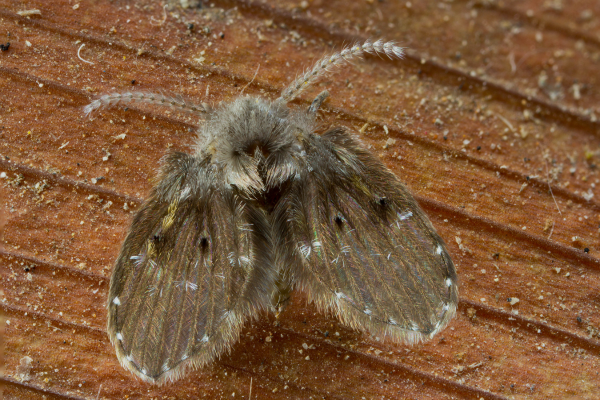
Drain flies are small, fuzzy, moth-like insects with wings held flat — breeding exclusively inside drains.
Identifying Drain Flies
Drain flies have a black body or dark grey body with fuzzy rounded wings held flat over the body. They are 1.5 to 5 mm long. Key sign: drain flies cluster near sinks, floor drains, and shower drains — not near fruit bowls. Insects clustering around a drain are almost certainly drain flies, not fruit flies.
Drain Fly Life Cycle
Drain fly infestations occur in drains with organic buildup. Larvae feed on bacteria and decaying matter. Adults cluster on walls near the drain after a 21–27 day life cycle.
How to Get Rid of Drain Flies
Scrub drain walls with a metal brush and apply an enzyme cleaner to break down biofilm. Pour boiling water weekly. Bleach kills surface organisms but not deeper biofilm. If drain flies persist after cleaning, a plumber should check for damaged pipes.
Fungus Gnats: Identification, Life Cycle, and Control
Fungus gnats are small, dark flies that thrive in the moist soil of overwatered houseplants, greenhouse plants, and garden containers.
Identifying Fungus Gnats
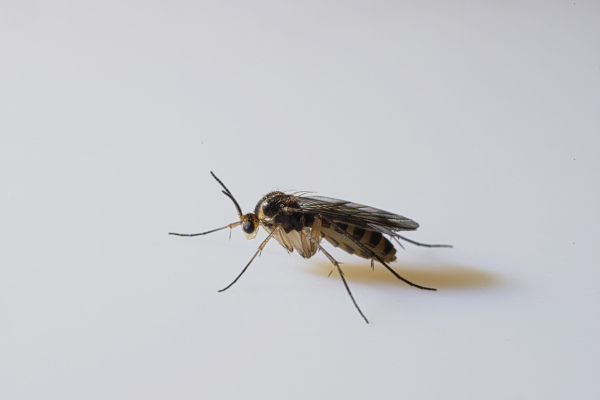
Adult fungus gnats are 1.5 to 3 mm, black body, long legs, clear wings with a Y-shaped vein. Small dark flies emerging from soil when you water confirm fungus gnats. Larvae live in soil, not in fruit or drains.
Fungus Gnat Life Cycle
Females lay eggs in the top two inches of moist soil. Larvae feed on fungus, organic matter, and plant roots — damaging and killing young plants. The life cycle takes 3 to 4 weeks. Adults are a nuisance but do not harm plants. Eliminating moist soil conditions is the effective solution.
How to Get Rid of Fungus Gnats
Let soil dry between waterings — larvae require constant moisture. Sticky yellow traps catch adults. Beneficial nematodes kill larvae biologically. A hydrogen peroxide drench (1 part 3% H2O2, 4 parts water) eliminates larvae.
• Replace or sterilize larvae-infested soil before reuse
• Quarantine new plants for two weeks before mixing with others
• Water only when the top inch of soil is dry — check before watering
Fruit Flies vs Drain Flies vs Fungus Gnats: Quick Comparison
Confirm identification before choosing a control method.
• Fruit flies — tan/brown body, red eyes, 1/8 inch, found near fruit and food; breed in fermenting food and damp drains
• Drain flies — dark grey/black body, fuzzy rounded wings, found clustered near drains; breed inside drain biofilm
• Fungus gnats — black body, clear wings, long legs, found near houseplants; larvae breed in moist soil
Near food: fruit flies. Near drains: drain flies. Near plants: fungus gnats. Address each site separately.
Preventing Fruit Flies, Drain Flies, and Fungus Gnats
Sanitation is the first line of defense for all three. These prevention methods deal with shared conditions and signs to prevent recurring infestations.
• Store fruit in sealed containers — remove overripe produce immediately
• Clean and dry drains and garbage areas daily during warm months
• Rinse recyclables — sugary residues in cans attract fruit flies
• Clean drains with enzyme cleaners to eliminate organic buildup
• Allow houseplant soil to dry between waterings
• Seal entry points around windows and vents with fine mesh screens
These insects rarely carry diseases of significance to humans — but they are a nuisance, a negative image risk for food businesses, and a sign of sanitation problems. Bugs like drain flies and fruit flies thrive wherever humans allow organic matter to accumulate.
When to Call Pest Control Services for a Flying Insect Problem
Persistent infestations in commercial kitchens across the greater Toronto area and Canada benefit from professional pest control services — protecting your business from a negative image and meeting health code compliance. Top Choice Pest Control handles all common pests with a home protection plan and 6-month guarantee.
🪰 Flying Insect Problem? Call Top Choice Pest Control — Free Estimate | Licensed | 6-Month Guarantee
Frequently Asked Questions — Fruit Flies, Drain Flies, and Fungus Gnats
How do I tell fruit flies, drain flies, and fungus gnats apart?
Look at where they congregate. Fruit flies hover near fruit and garbage with red eyes and tan bodies. Drain flies cluster near drains — dark, fuzzy, with rounded wings. Fungus gnats are black with long legs and hover near plants. Correct identification matters because the get rid method is completely different for each.
What is the life cycle of fruit flies and why do they spread so fast?
The fruit fly life cycle from egg to adult takes as little as 8 to 10 days. Females lay up to 500 eggs near fermenting food and larvae develop rapidly in warm temperatures. A small number of adults can produce a full infestation in one to two weeks. Remove all breeding sites — fruit, dirty drains, and garbage — simultaneously to break the cycle.
Do I need professional pest control services for fruit flies or gnats?
Most infestations resolve through sanitation alone — remove breeding sites, clean drains, and dry out plant soil. Call pest control services when the problem persists after thorough source removal, involves a commercial kitchen, or when drain flies return despite cleaning — which may indicate a damaged pipe requiring plumbing inspection.
What actually kills fruit flies — do sprays work?
Sprays kill adults on contact but do not eliminate breeding sites — the infestation returns within days. The effective solution is removing the source: discard overripe produce, scrub drains, and clean garbage cans. Vinegar traps with dish soap catch adults and monitor infestation levels. Cleaning is far more effective than any spray.
When Should I Call Pest Control for Fruit Flies, Drain Flies, or Fungus Gnats?
Most infestations resolve through sanitation alone — remove the breeding site, clean drains with enzyme cleaner, and let houseplant soil dry. Call pest control when the problem persists after thorough source removal, involves a commercial kitchen, or when drain flies return despite cleaning — indicating a damaged pipe.
Stop the Infestation at the Source
Identify the species, eliminate the breeding site, maintain sanitation. Top Choice Pest Control provides trusted, QualityPro certified pest control services across the greater Toronto area and Barrie.
📞 Call Top Choice Pest Control | 416-904-5351 | Barrie & Greater Toronto Area | Free Estimate
Top Choice Pest Control | Barrie, Ontario | QualityPro Certified | 8× HomeStars Award | Licensed & Insured