How long does a housefly live for? Most people ask this question after seeing flies around their home or business every day. While a single house fly may only live for a few weeks, a fly infestation can last much longer because flies reproduce at a rapid rate. House flies contaminate food, spread bacteria, and create ongoing frustration for property owners. A few flies can quickly become dozens when breeding sites remain untreated. Understanding the life cycle of flies and how infestations develop can help homeowners and businesses take action before fly problems become more difficult to control.
What is the Life Cycle of a House Fly?
A house fly has a short life cycle, but it reproduces quickly. Adult house flies usually live between 15 and 30 days under normal indoor conditions. Some adult domestic flies may survive longer when food and shelter remain available.
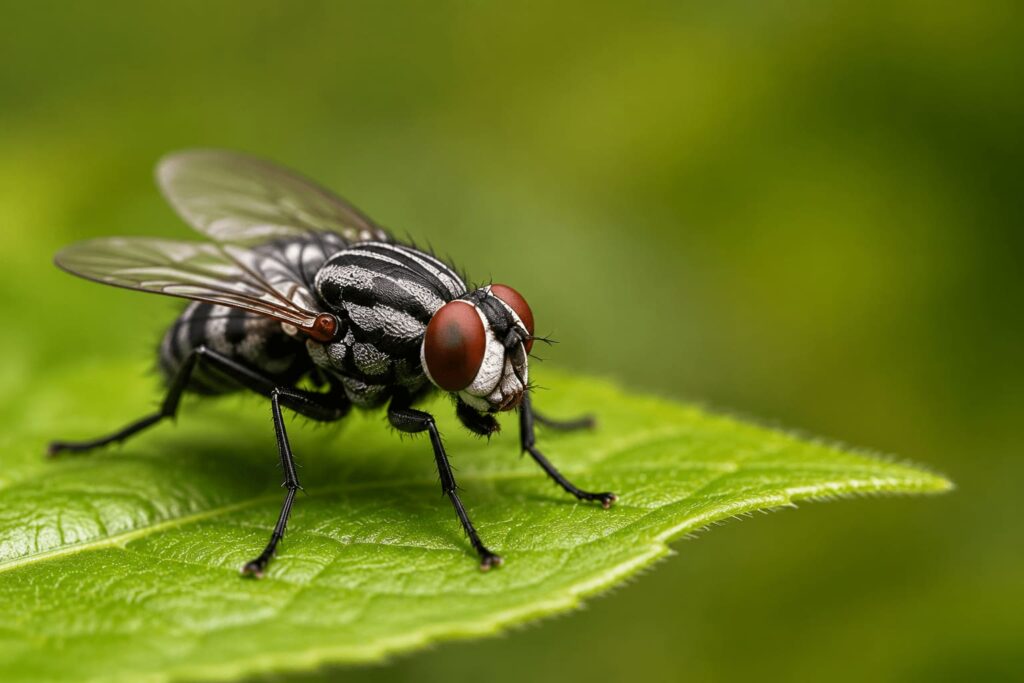
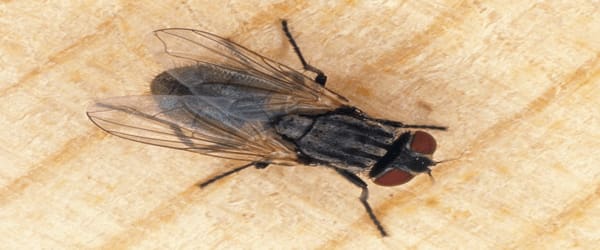
House flies are less than 3/8 inch in length and have four dark stripes down the back of their thorax. House flies have sponging mouthparts and eat solid food by first liquefying it with their saliva. House flies can also regurgitate onto a solid food to assist with the liquefying process.
House flies breed in decaying organic matter and other moist materials. Female flies lay eggs in food waste, animal feces, pet feces, dog feces, organic waste, rotting food, and breeding material found around properties.
Eggs hatch within a short period and develop into larvae. During the larval stage, flies feed on organic materials before transforming into pupae and then adult flies. Because the life cycle moves quickly, house flies produce multiple generations during a season.
This rapid reproduction explains why a small number of flies can turn into a house fly infestation within weeks.
What Do House Flies Look Like?
Common house flies are gray insects with two wings and small hairs covering parts of their bodies. Adult house flies typically measure about six to seven millimeters long.
Several fly species resemble house flies. Cluster flies, blow flies, and face flies often appear around homes and businesses. Although these flies look similar, their habits and breeding locations vary.
Cluster flies commonly enter structures during early fall. Blow flies often breed around dead animals and decaying organic matter. Face flies usually remain near domestic animals and livestock.
Proper identification helps determine the most effective treatment strategy.
Signs of a House Fly Infestation
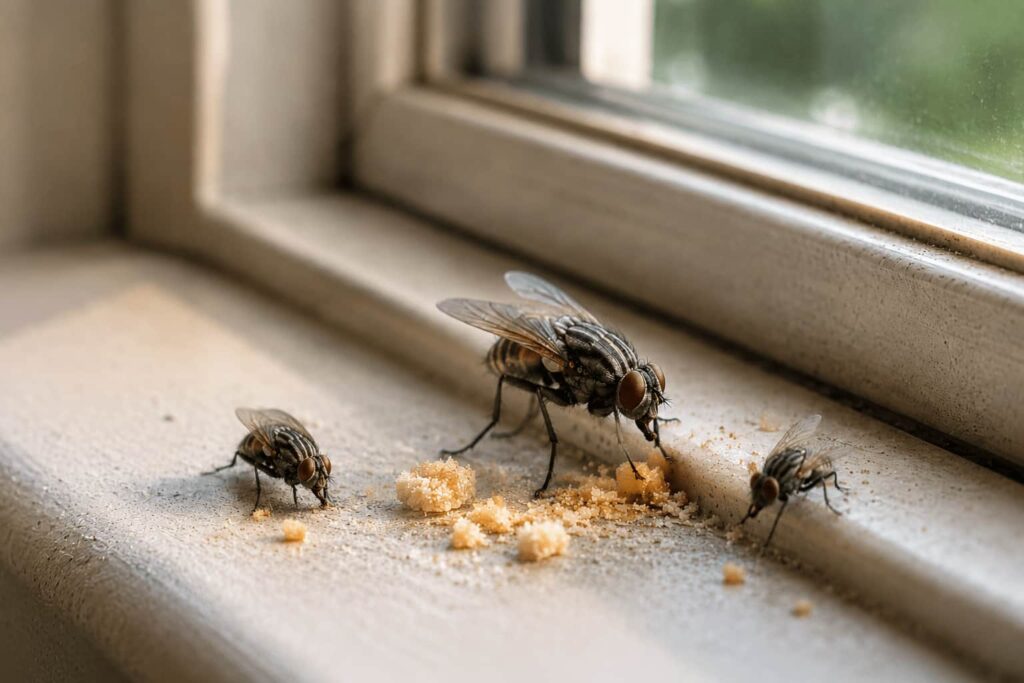
One common sign of a house fly infestation is seeing flies found indoors throughout the day. Flies often gather near windows, food preparation areas, trash cans, and garbage cans.
You may also notice flies around food sources, pet waste, animal feces, compost piles, or organic waste. Increased fly activity near kitchens and dining areas often indicates nearby breeding sites.
Another common sign occurs when a fly lands repeatedly on food, counters, and surfaces. Because flies feed by regurgitating digestive fluids, they can spread contaminants across multiple areas.
If flies continue appearing after you kill flies with a fly swatter, there is often an active breeding source nearby.
Why House Flies Are a Problem
Many people view flies as a nuisance. However, flies create more than simple annoyance. House flies eat and feed on a wide range of materials, including waste, animal matter, and human food.
After contacting contaminated materials, flies can transfer bacteria to surfaces and contaminating food intended for consumption. This creates concerns for homes, restaurants, healthcare facilities, and commercial properties.
Because house flies breed quickly, ignoring a fly infestation allows populations to increase. Large infestations become harder to eliminate and often require more extensive treatment.
Early action helps reduce health risks and prevent future infestations.
DIY Methods vs Professional Pest Control
Many homeowners attempt to get rid of flies using DIY methods. Fly traps, sticky traps, vinegar traps, bug zapper devices, and fly swatter products can reduce visible flies.
These solutions may provide short term control, but they rarely eliminate the source of the infestation. Adult flies represent only part of the problem. Eggs, larvae, and breeding material often remain hidden.
To rid of house flies successfully, property owners must identify and remove breeding sites. Without addressing the source, new flies continue emerging.
Professional pest control focuses on both active flies and the underlying cause of the infestation. This approach delivers better long-term results.
Pest Control Near Me
Many people search for pest control near me after repeated fly activity inside their house or business. Professional pest control services begin with a detailed inspection to identify breeding sites, entry points, and attractants.
Technicians inspect garbage cans, trash cans, wall void areas, food storage locations, pet areas, and outdoor waste zones. Once the source is identified, treatment can begin.
Professional services often include sanitation recommendations, exclusion methods, and preventive measures designed to stop recurring infestations.
How to Prevent House Flies
Preventing flies starts with sanitation. Remove food waste regularly and keep garbage cans and trash cans clean. Use tight fitting lids on waste containers to reduce access to breeding material.
Store food properly and avoid leaving food exposed for long periods. Clean pet waste, dog feces, and animal feces promptly. Remove grass clippings, organic waste, and rotting food from outdoor areas.
Seal entry points around doors, windows, and utility openings. Eliminate standing organic matter where flies may lay eggs.
Ultraviolet light traps, fly traps, sticky traps, and residual insecticide applications may support control efforts when used correctly.
Why Choose Top Choice Pest Control
Top Choice Pest Control helps homeowners and businesses eliminate fly infestations through proven pest control services. Their experienced team performs detailed inspections to identify breeding sites and treatment needs.
Their licensed technicians use products approved under Health Canada regulations and apply treatments with safety in mind. Whether the issue involves common house flies, cluster flies, blow flies, or face flies, the team develops solutions tailored to the property.
Customers trust Top Choice Pest Control because of their fast response times, great service, and commitment to long-term results. Their goal is to eliminate current infestations and help prevent future infestations.
FAQs
How long does a house fly live?
A house fly typically lives between 15 and 30 days, although environmental conditions can affect lifespan. While individual flies do not live long, a house fly infestation can continue for months because flies reproduce rapidly. House flies lay eggs frequently, allowing new generations to replace older flies throughout the season.
What causes a fly infestation inside a home?
A fly infestation often develops when breeding sites exist nearby. Common sources include garbage, food waste, pet waste, animal feces, rotting organic matter, and dead animals. House flies eat and reproduce in these environments. Removing breeding material and improving sanitation helps reduce fly problems and prevent future infestations.
Are cluster flies and blow flies different from house flies?
Yes. Cluster flies, blow flies, and face flies belong to different fly species. Cluster flies often enter buildings during early fall. Blow flies commonly breed around dead animals and decaying organic matter. While they share similarities with house flies, each species has unique habits and may require different control approaches.
Do house flies spread germs?
Yes. When a fly lands on waste materials and then contacts food or surfaces, it may transfer bacteria and contaminants. Because house flies eat and feed on various organic materials, they can contribute to sanitation concerns. Professional pest control helps reduce these risks by addressing both flies and breeding sources.
What is the best way to get rid of house flies?
The most effective way to get rid of flies involves eliminating breeding sites and treating active populations. Professional pest control services identify the source of the infestation and implement targeted solutions. Control methods may include sanitation improvements, fly traps, residual treatments, and exclusion measures to prevent recurring fly problems.
Conclusion
Although a house fly lives only a few weeks, a fly infestation can continue much longer because flies reproduce quickly. House flies contaminate food, create sanitation concerns, and become a persistent nuisance when breeding sites remain active.
Understanding the life cycle of flies, recognizing infestation signs, and taking action early can help protect your home or business. Professional pest control remains the most reliable solution for long-term fly control.
Schedule Your Fly Inspection Today
If you are dealing with flies in your home, restaurant, office, warehouse, or commercial property, contact Top Choice Pest Control today. Their experienced team can identify breeding sites, eliminate active infestations, and help prevent future infestations. Schedule an inspection now and take the first step toward a cleaner, healthier, and fly-free environment.