If there is a skunk under deck, do not seal the opening or attempt to approach the den. The right response depends on whether young are present — rushing removal during breeding season can trap baby skunks inside and lead to a far worse outcome. This guide covers how to confirm skunk activity, what risks a striped skunk den carries, how the removal process works in Barrie, and how to prevent skunks from returning. It is for Ontario homeowners and property owners dealing with an active or suspected skunk problem.
Key Takeaways
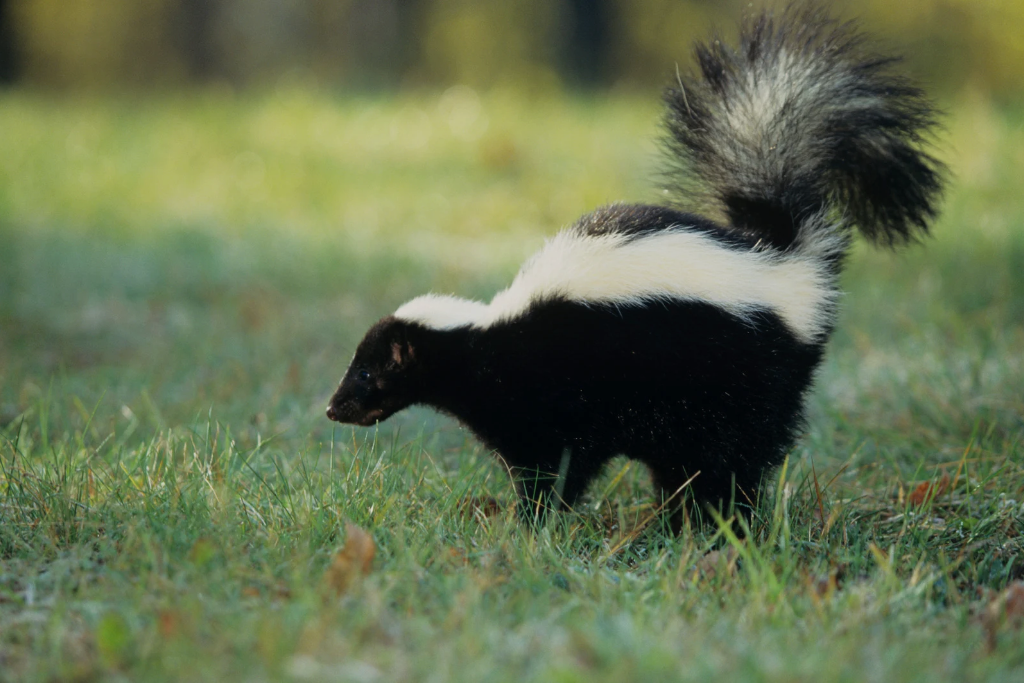
- Striped skunks (Mephitis mephitis) weigh 4 to 10 pounds and can travel 1 to 2 miles per night — a skunk denning under your deck in Barrie has likely been ranging across your yard for some time.
- April to September is baby skunk season in Ontario; attempting removal while a litter is present risks orphaning up to 6 kits and is strongly discouraged.
- A skunk can spray up to 6 times before needing to replenish its musk — sealing or startling an active den almost always triggers a spray event.
- Heavy-duty galvanized hardware cloth installed in a trench 20 to 30 cm below grade is the most effective permanent barrier against re-entry.
- Under Ontario’s Fish and Wildlife Conservation Act, nuisance wildlife including skunks can be legally removed by a licensed operator.
Why Skunks Den Under Decks in Barrie
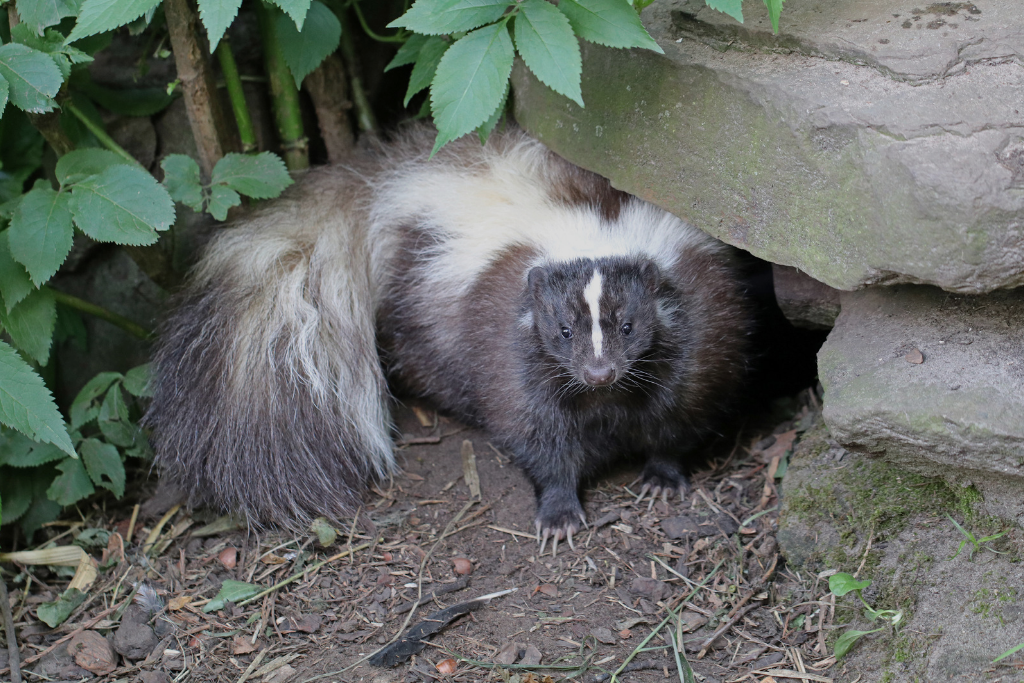
Striped skunks are opportunistic. They do not dig elaborate burrows from scratch when a ready-made shelter exists. The gap between a deck frame and the ground — typically 10 to 15 cm — is exactly the access a skunk needs, and the void beneath offers protection from predators, wind, and cold through the winter months.
Skunk dens have openings roughly 10 to 15 cm wide. Once inside, skunks enlarge the space using their long claws, displacing soil and occasionally undermining deck footings. Rock piles, wood stacks, crawl spaces, and porches attract them for the same reason: covered ground-level shelter close to food sources.
Food is the other draw. Skunks eat grubs, insects, pet food, bird feeder spillage, and food scraps from unsecured garbage cans. A lawn with an active grub population will draw skunks regardless of whether exclusion is in place elsewhere. Removing food sources is as important as sealing the den.
Signs of a Skunk Under Deck
Cone-shaped holes in the lawn: Skunks dig for grubs, leaving holes roughly 5 cm across — slightly smaller than a golf ball. These are one of the earliest signs of skunk activity near the deck.
Tracks: Skunk tracks resemble house cat prints but with 5 toes and visible claw marks. Front prints are roughly 3 to 4 cm wide. Look for tracks in soft soil or mud near the deck base.
Droppings: Skunk droppings are tubular, 2.5 to 5 cm long, and often contain insect parts or berry seeds. They are typically left near the den entrance or along foraging paths.
Cleared den opening: A patch of bare soil at the base of deck skirting where material has been pushed aside, roughly 10 to 15 cm wide, indicates an active entry point.
Odour: Skunk spray smells strongly of sulphur and rotten eggs. Low-level odour near the deck in the early morning — skunks are nocturnal and return to the den before dawn — is often the first sign homeowners notice.
Skunks are also active diggers in garden beds and along fence lines. Finding digging activity in multiple locations across the yard alongside deck odour confirms a resident skunk rather than a passing one.
Skunk Odour and Health Risks Under Your Deck
Spray
A skunk’s spray is an oily, sulphur-containing compound (thiol) that causes eye irritation, nausea, and persistent odour on surfaces, fabric, and pet fur. Skunks can spray up to 6 times before exhausting their supply — which takes several days to replenish — making an agitated skunk in a confined den space a significant risk.
Home remedies such as tomato juice do not neutralize skunk odour. A mixture of hydrogen peroxide, baking soda, and dish soap is more effective but can bleach dark fur. Commercial odour neutralizers perform better than either home option.
Disease and Parasite Risk
Skunks are a primary rabies vector species in Ontario. Transmission to humans requires direct contact with saliva and is rare, but a skunk behaving abnormally — active during the day, moving erratically — should be reported to animal services rather than handled by a pest control company.
Skunks also carry Baylisascaris columnaris, a zoonotic roundworm that can infect other animals and, in rare cases, humans through contact with contaminated soil or droppings. They can transmit leptospirosis and distemper to pets. Dogs that spend time near the deck are at elevated risk of contact with skunk droppings or a startled skunk.
Baby Skunks: Why Timing Matters for Removal
April to September is baby skunk season in Ontario. Female skunks give birth to litters typically ranging from 4 to 6 kits. Kits are born blind and deaf, weighing roughly 28 grams, and are completely dependent on the mother for the first weeks of life.
Attempting to seal the den or trap the mother skunk during this period can orphan the litter inside. Trapped kits that cannot be located will die inside the structure, creating a serious odour and sanitation problem.
The humane approach during baby season is to wait. By late summer, young skunks become mobile and begin foraging independently. Once the family has left the den — confirmed by monitoring the entry point over several nights — the opening can be sealed permanently.
If removal cannot wait, a licensed wildlife operator can install a 1-way exclusion door timed to allow the mother and mobile young to exit together. This should only be attempted once kits are confirmed to be mobile — typically July onward.
How to Get Rid of a Skunk Under Your Deck
What Not to Do
Avoid mothballs, poisons, ammonia rags, and crumpled newspaper stuffed into the opening. These methods risk agitating the skunk rather than encouraging it to leave. Ammonia and vinegar may deter skunks temporarily but do not reliably evict an established den. Motion-activated lights can discourage skunks from an area but are not sufficient on their own.
Never seal the entry point without confirming it is empty. Place a light layer of flour across the opening at dusk and check for tracks the next morning — no tracks after several nights indicates the skunk has left.
Professional Removal
A licensed technician installs a 1-way exclusion door over the confirmed entry point. The door allows the skunk to push out to forage at night but prevents re-entry. After 3 to 5 nights of confirmed inactivity, the technician removes the door, inspects the den for young, and seals the opening permanently.
Trapping is used in some situations but carries a higher risk of orphaning young if a mother skunk is removed before kits are mobile. A licensed operator assesses which method is appropriate based on the time of year and signs of a skunk family present.
General wildlife removal pricing in Ontario ranges from $150 to $400 for a standard single-den situation, with higher costs for multi-point exclusion or when young are present. For Top Choice’s current rates, see the pricing page or call (416) 904-5351 for a free estimate.
Prevent Skunks from Returning
After the den is cleared, exclusion prevents other animals — including raccoons — from moving into the same void.
Hardware cloth barrier: Install heavy-duty galvanized hardware cloth around the full deck perimeter. Dig a trench 20 to 30 cm deep and bend the bottom of the mesh outward at a 90-degree angle before backfilling. This L-shaped barrier prevents skunks from digging under the edge. Openings in the mesh should be no larger than 2.5 cm.
Cover window wells: Open window wells near the deck base are secondary access points; fit them with grated covers.
Remove food attractants: Secure garbage cans with locking lids, take in pet food before dusk, fix dripping taps and standing water, and consider addressing lawn grubs — which are the primary food source drawing skunks to yard areas in the first place.
Bird feeders: Move bird feeders away from the deck or switch to a style that limits seed spillage on the ground. Seed on the ground draws skunks, rats, and other wildlife.
Frequently Asked Questions – Skunk Under Deck
How do I know if a skunk is under my deck?
Look for cone-shaped holes roughly 5 cm across in the lawn near the deck, tubular droppings near the base, and a cleared entry point about 10 to 15 cm wide in the skirting. Sulphur odour near the deck in the early morning is the most common first indicator. Place flour across the suspected opening at dusk — tracks the next morning confirm an active skunk.
What should I do about baby skunks under my deck?
Do not seal the entry point or attempt trapping during baby skunk season (April to September). Blocking the den while the mother skunk is out foraging traps the kits inside. Wait until late summer when young skunks are mobile and foraging independently, then monitor the opening over several nights before sealing. A licensed wildlife removal company can assess whether a 1-way door is appropriate.
How do I get rid of skunk odour after a spray under my deck?
Tomato juice does not neutralize skunk odour. A mixture of hydrogen peroxide, baking soda, and dish soap applied to affected surfaces is more effective. Commercial enzyme-based odour neutralizers work best for treated wood and concrete. Ventilate the area and allow treated surfaces to dry fully before re-exposure. For pets sprayed near the face, flush eyes with clean water and contact a vet.
How do I prevent skunks from coming back under my deck?
Install heavy-duty galvanized hardware cloth around the full perimeter with the bottom bent outward in a trench 20 to 30 cm deep — this stops future skunks from digging back in. Remove food sources: secure garbage cans, bring in pet food at night, move bird feeders, and address lawn grubs. Motion-activated lights can deter skunks from the yard as a secondary measure.
Book Skunk Removal in Barrie With Top Choice Pest Control
If there is a skunk under your deck — or you have noticed signs of an active den — contact Top Choice Pest Control for an inspection. Top Choice serves Barrie, Vaughan, North York, and surrounding communities across Ontario with licensed wildlife removal and pest control services.
Call (416) 904-5351 or visit Top Choice Pest Control services to book.