What do carpenter ants look like? This is one of the most common questions property owners ask after spotting large ants inside a house or business. Carpenter ants often signal a larger pest problem that may involve hidden nests and damaged wood. While carpenter ants do not eat wood like termites, they tunnel through it to create nests. A carpenter ant infestation can grow over time and affect both residential and commercial properties. Learning how to identify carpenter ants, recognize signs of infestation, and understand treatment options can help protect your property and prevent costly repairs.
Identifying Carpenter Ants
Carpenter ants are among the largest ant species found in Canada. Black carpenter ants are the species most people encounter in Southern Ontario. Worker ants vary in size, which means some ants within the same colony may appear larger than others.
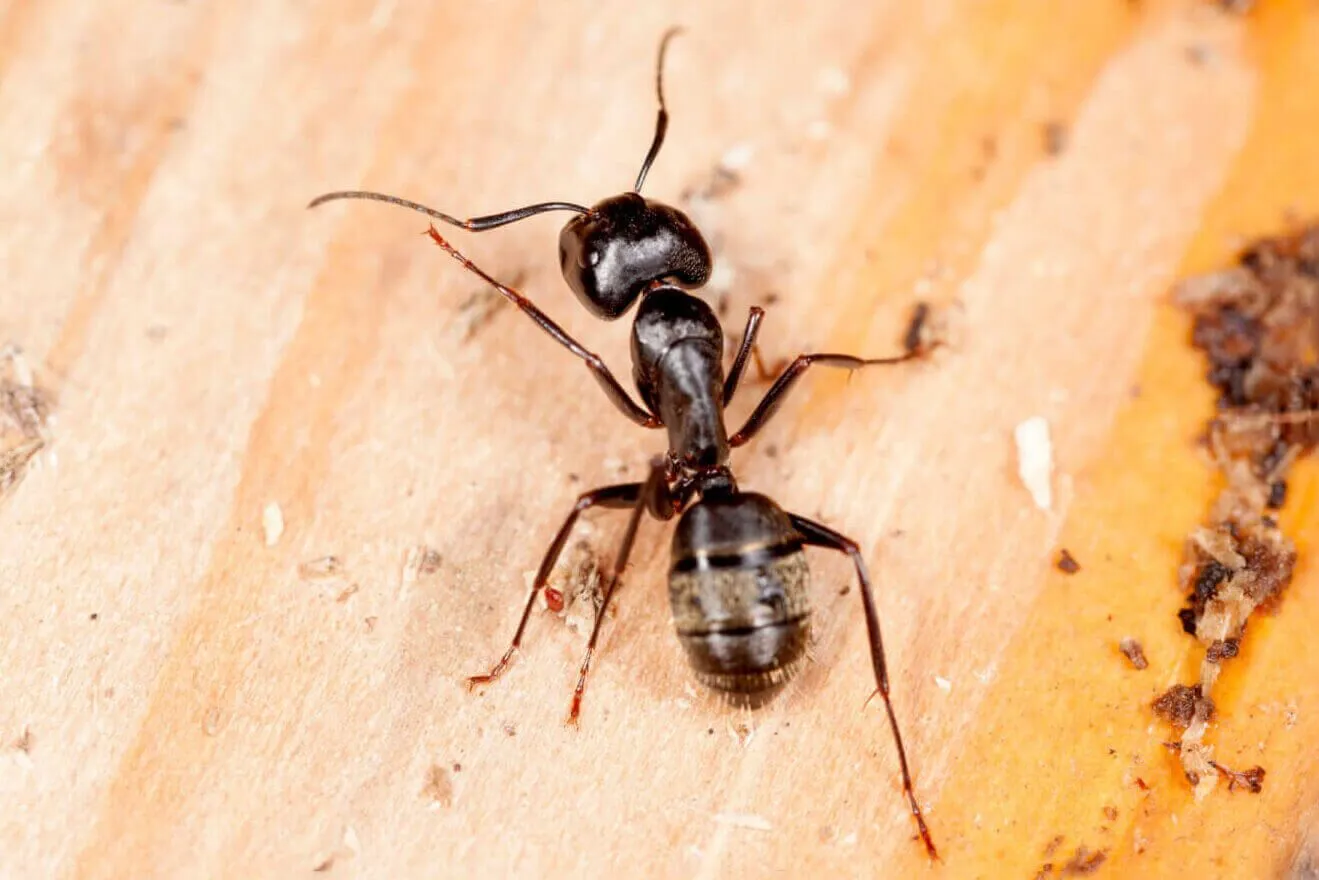
Carpenter ants usually have a black, dark brown, or reddish-black appearance. They have a narrow waist, bent antennae, and large mandibles used for excavating wood. Unlike termites, carpenter ants have a distinct body shape and a segmented appearance.
Winged ants may appear during certain times of the year. These reproductive ants leave the parent colony to establish new colonies. Many homeowners mistake winged ants for termites. However, carpenter ants have a narrow waist and unequal wing sizes, while termites have a thicker body and equal-length wings.
Where Carpenter Ants Live
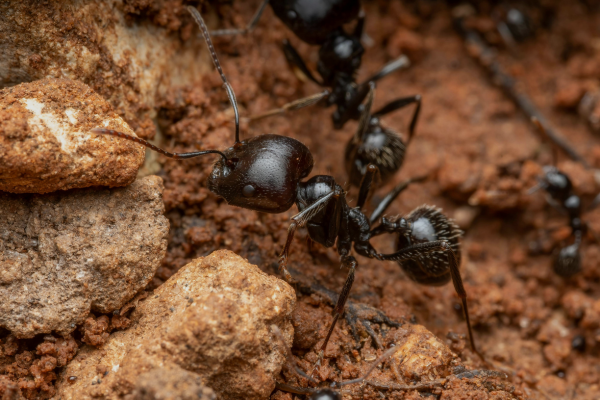
Carpenter ants live in moist or damaged wood where they can establish nesting sites. Carpenter ants prefer decaying wood, rotting wood, and structural wood affected by moisture problems. Common nesting locations include wall voids, hollow doors, window frames, wooden structures, and damaged tree branches.
A well established colony often consists of a main colony and several satellite nests. The main colony usually remains outdoors in tree stumps, logs, or decaying wood. Satellite nests may develop inside homes and businesses.
Because carpenter ants build nests inside hidden areas, infestations often remain unnoticed until signs of damage become visible.
Signs of a Carpenter Ant Infestation
One of the most common signs of a carpenter ant infestation is the appearance of large ants inside the property. Seeing worker ants regularly may indicate nesting activity nearby.
Another sign involves sawdust like shavings beneath walls, ceilings, or wooden structures. Carpenter ants create nests by removing wood and pushing debris out of their tunnels. These shavings often contain insect parts and wood fragments.
Rustling sounds inside walls may also signal an active infestation. Large colonies moving through wall voids can create faint noises that become noticeable at night.
Winged ants appearing indoors may indicate a mature colony. If ants find suitable nesting conditions, the infestation can continue expanding.
Do Carpenter Ants Eat Wood?
Many people believe carpenter ants eat wood. This is a common misconception. Carpenter ants eat sweet foods, proteins, insects, and other food sources. Carpenter ants feed on honeydew produced by aphids, dead insects, and household food items.
Although carpenter ants eat many food sources, they do not consume wood as a food source. Instead, they tunnel through wood to create nests. This activity can weaken structural wood and contribute to structural damage over time.
Because carpenter ants build nests inside wood, their presence often creates confusion with termite infestations.
Dangers of Ignoring Carpenter Ant Problems
A carpenter ant infestation should never be ignored. As colonies grow, ants continue expanding their nesting system. Multiple satellite nests may develop throughout the property.
Over time, nesting activity can damage support beams, wall structures, flooring systems, window frames, and other wooden components. Moisture problems often accelerate colony growth and increase the risk of structural damage.
Large colonies can persist for years if property owners fail to address the issue. What starts as a nuisance may develop into a costly repair project.
Early detection and prompt treatment help reduce risks and prevent extensive damage.
DIY Treatments vs Professional Carpenter Ant Extermination
Many homeowners attempt DIY treatments after discovering carpenter ants. Products such as boric acid and diatomaceous earth may kill some worker ants. However, these solutions rarely eliminate the entire colony.
DIY treatments often target visible ants while leaving the main colony untouched. Satellite nests hidden inside walls and wood structures may continue growing even after surface treatments.
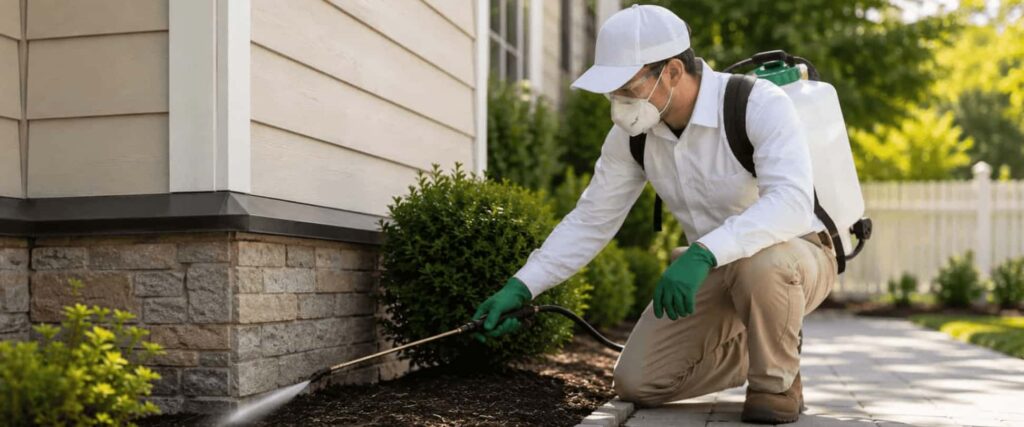
Professional ant control focuses on locating nesting sites and eliminating the source of the infestation. Certified technicians inspect the property, identify ant nest locations, and develop a treatment plan based on infestation size and nesting activity.
Professional carpenter ant extermination provides more reliable results than most store-bought products.
Pest Control Near Me
Property owners search for pest control near me after spotting carpenter ants indoors. Professional pest control services offer a structured approach that includes inspection, treatment, monitoring, and prevention.
A professional ant exterminator can identify entry points, nesting areas, and conditions attracting ants to the property. Technicians also recommend corrective measures that help reduce future infestations.
Fast action helps prevent colonies from expanding and causing additional damage.
Why Choose Top Choice Pest Control
Top Choice Pest Control provides carpenter ant extermination services for residential or commercial property owners throughout Southern Ontario. Their certified technicians understand carpenter ant behavior and know how to locate hidden colonies.
The team performs detailed inspections, identifies nesting sites, and develops treatment plans based on each infestation. Their services follow Health Canada regulations and industry best practices.
Top Choice Pest Control focuses on customer satisfaction through prompt response times, proven treatment methods, and reliable pest control services. Their goal is to help property owners eliminate carpenter ants and maintain a pest-free environment.
Whether you need a free estimate or a free quote, their experienced team can help you address the problem before significant damage occurs.
FAQs
What do carpenter ants look like compared to other ants?
Carpenter ants are larger than many ant species and often appear black, dark brown, or reddish-black. They have a narrow waist, bent antennae, and large mandibles. Unlike fire ants, carpenter ants live in wood and create nesting galleries. Their size and body shape often make them easier to identify than smaller household ants.
Do carpenter ants eat wood?
No. Carpenter ants eat sweet foods, insects, and protein sources. While many people believe carpenter ants eat wood, they actually excavate wood to create nests. This nesting activity can weaken structural materials over time. Professional ant control helps locate colonies and prevent additional damage to the property.
When should I call a professional ant exterminator?
You should contact ant exterminators when you notice large numbers of ants, winged ants, sawdust-like shavings, or recurring activity indoors. A professional carpenter ant extermination service can locate hidden nests and identify the source of the infestation. Early treatment helps reduce damage and prevents colony expansion.
Can carpenter ants and bed bugs infest the same property?
Yes. Carpenter ants and bed bugs can exist in the same home or business. Each pest requires a different treatment strategy. A complete inspection helps identify all active infestations and allows technicians to develop a pest management plan that addresses multiple issues at the same time.
How much does carpenter ant treatment cost?
The cost depends on colony size, infestation location, and treatment requirements. Many pest control companies provide a free estimate or free quote after an inspection. Control services focus on locating the colony, treating affected areas, and preventing future activity while following Health Canada guidelines and industry standards.
Conclusion
Carpenter ants are large insects that tunnel through wood to create nests. They often target moist or damaged wood and can establish large colonies within homes and businesses. Recognizing the signs of a carpenter ant infestation early helps prevent structural damage and costly repairs.
Professional pest control remains the most effective way to eliminate carpenter ants and protect your property. Licensed technicians can identify colonies, apply targeted treatments, and recommend prevention measures that deliver long-term results.
Schedule Your Carpenter Ant Inspection Today
Control Top Choice Pest Control service today for free quote!
If you have noticed large ants, winged ants, sawdust-like shavings, or signs of nesting activity, contact Top Choice Pest Control today. Their experienced team provides professional carpenter ant extermination and pest control services for homes and businesses. Schedule your inspection today and take the first step toward controlling carpenter ants and protecting your property.