TOP CHOICE PEST CONTROL | BARRIE, ONTARIO
Key Takeaways
✔ Carpenter ants do not eat wood — they tunnel through it to nest. Termites consume wood for food.
✔ Carpenter ants have a pinched waist, bent antennae, and leave coarse frass (sawdust mixed with insect parts). Termites have a thick straight waist, straight antennae, and pack tunnels with mud.
✔ Subterranean termites build mud tubes along foundations. Carpenter ants leave no mud tubes.
✔ Carpenter ants are far more common in Barrie, Ontario than termites. Finding either species requires immediate professional inspection.
✔ Both cause significant structural damage over time — but misidentifying the species leads to the wrong treatment and continued damage.
✔ Detection of carpenter ants often indicates an underlying moisture problem that must be fixed alongside pest control.
Introduction
Carpenter ants and termites are the two most common wood-destroying insects in Ontario — and they are frequently confused. Knowing the difference between carpenter ants vs termites determines whether you call a general pest control company or a specialist, whether you address moisture or soil, and how quickly you need to act. Both cause significant structural damage over time. Both can be active for months before homeowners notice the signs. This guide covers every physical and behavioural difference so you can identify which insect you have and choose the right treatment.
Carpenter Ants vs Termites: Physical Appearance
Body shape is the fastest way to separate these two insects. Correct identification is essential before any ant treatment or pest control begins.
Carpenter Ant Appearance
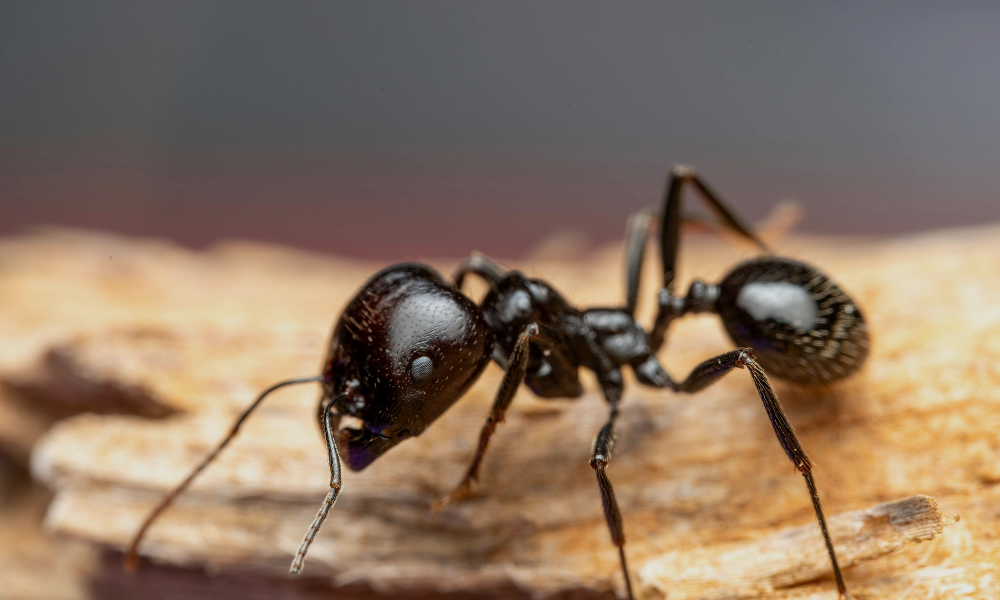
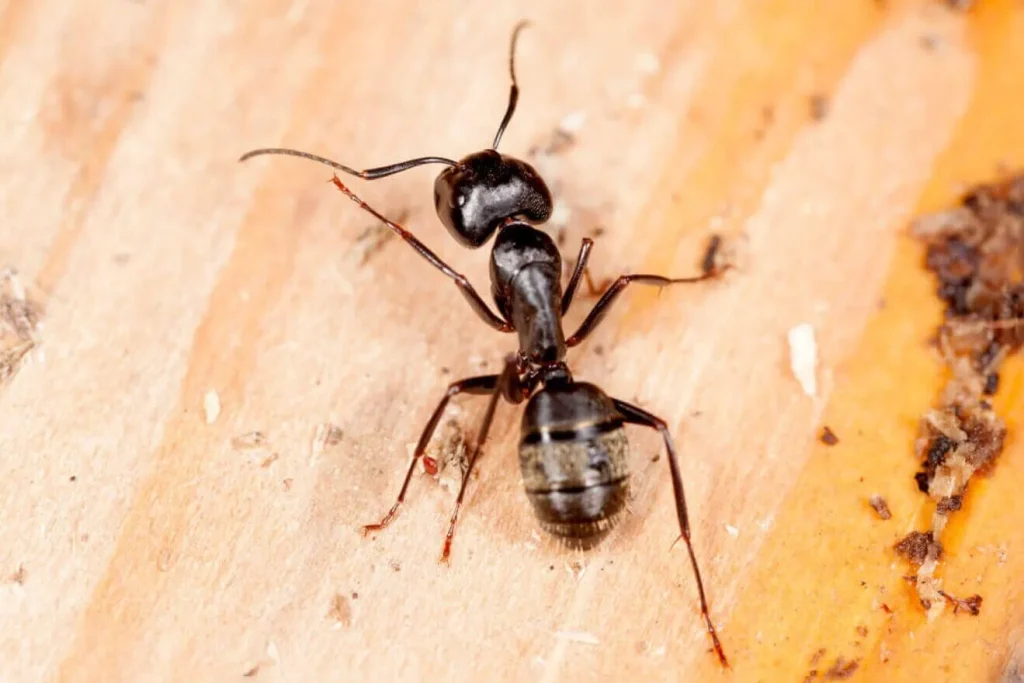
Carpenter ants have a distinct pinched waist — a deeply constricted node between the thorax and abdomen. Antennae are bent or elbowed. Carpenter ants range from 3.4 mm to 13 mm long, making them among the largest ant species found in Canadian homes. Most are black or dark reddish brown.
Worker ants have three distinct body segments. When winged reproductive forms appear in spring, the front wings are longer than the rear wings — a key distinction from termite swarmers and other insects with equal-length wings.
Termite Appearance
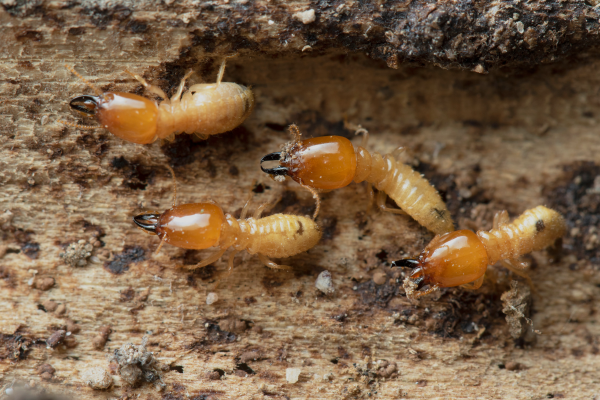
Termites have a straight, thick waist — no constriction between thorax and abdomen. Antennae are straight, not elbowed. Termite swarmers have four wings of equal length. Workers are pale, soft-bodied, and rarely seen exposed — they remain inside wood or soil. Subterranean termites, the species present in Ontario, are small and cream-coloured.
Termites are often described as looking like “white ants.” The thick waist and straight antennae distinguish them from every ant species found in Canada.
Carpenter Ant Damage vs Termite Damage
Both insects damage structural wood, but they do it differently. The type of damage tells you which insect you have.
How Carpenter Ants Damage Wood
Carpenter ants do not eat wood — they tunnel through it to create galleries for nesting. Carpenter ants prefer damp, decaying, or water-damaged wood. Tunnels are clean and smooth, as if sanded. There is no mud packing inside the galleries.
Frass is the most reliable sign of carpenter ant activity. Frass is coarse sawdust mixed with insect parts — the debris carpenter ants push out of their tunnels. Finding frass near baseboards, window frames, or wall voids is the single clearest indicator of an active carpenter ant infestation.
Structural Risk and Property Damage
Carpenter ants can cause significant structural damage over time. A colony excavating wood in roof joists, window frames, or subflooring over several years causes cumulative structural failure that is costly to repair. Early detection and treatment protect property owners from escalating damage.
How Termites Damage Wood
Termites consume wood for food — they do not simply excavate it. Termite tunnels are rough and jagged, packed with mud or soil. There is no frass. Termite-damaged wood sounds hollow when tapped and may show a honeycomb interior when broken open.
Subterranean termites build mud tubes to travel between soil and wood. Mud tubes on a foundation wall, sill plate, or basement framing are the most reliable sign of subterranean termite activity. Carpenter ants leave no mud tubes.
Termites consume wood continuously and silently. A severe termite infestation can compromise structural integrity over years without any visible external signs until major damage has occurred.
Where Carpenter Ants and Termites Build Nests
Carpenter Ant Nesting Habits
Carpenter ant colonies nest in moist or damaged wood. Outdoors, the parent colony establishes in tree stumps, wood piles, and decaying wood near the foundation. Indoors, satellite nests form in moisture-damaged areas — behind leaking pipes, inside roof structures with water damage, around window frames, and inside wall voids.
Detection of carpenter ants often indicates an underlying moisture problem. Ants invade homes when moisture conditions create suitable nesting wood. Home ants that are large and black at night lead back toward wall voids and crawl spaces — following these ant trails at night is the primary way to find carpenter ants. Without fixing the moisture source, the ant infestation reappears after treatment.
Carpenter ant colonies can have a queen, workers, and larvae. A mature carpenter ant colony ranges from a few hundred to over 3,000 workers, with satellite nests extending the infestation across multiple locations in the same structure.
Termite Nesting Habits
Subterranean termites — the species found in Ontario — nest underground in the soil and tunnel up into above-ground wood. The nest itself is below the frost line and is rarely visible. They require constant contact with moisture in the soil to survive.
Termites build nests connected to above-ground structures via mud tubes. Any crack in the foundation, gaps around utility penetrations, or wood-to-soil contact gives subterranean termites a route into a structure. Unlike carpenter ants, termites do not need decaying wood — they can attack sound structural wood directly.
Which Species Is More Common in Barrie, Ontario?
Carpenter ants are more common in Barrie than termites. The climate and housing stock of Barrie and Simcoe County creates ideal conditions for carpenter ant infestations — cold winters push colonies into heated structures, and older housing stock with moisture issues provides nesting sites.
Termites are present in Southern Ontario but are far less prevalent than in warmer regions. The City of Toronto operates a termite control program for designated areas with confirmed subterranean termite activity. Barrie and Simcoe County have significantly lower termite pressure than the Greater Toronto Area.
Barrie pest control for wood-destroying insects is primarily carpenter ant focused. However, any professional ant inspection should assess termite risk as well, particularly for properties with foundation cracks, soil-to-wood contact, or a history of moisture problems.
Other Ant Species to Know in Barrie
Not every ant infestation in Barrie involves carpenter ants. Pavement ants build nests beneath concrete slabs and are common in driveways and sidewalks. Pharaoh ants are tiny, pale yellow ants that nest inside wall voids and are exceptionally difficult to control — spraying pharaoh ants scatters the colony. Red imported fire ants (RIFA) are not yet established in Ontario, though the European fire ant (Myrmica rubra) is invasive in southern Ontario. Other ants such as odorous house ants, small ants, and red ants are common household pests that require different treatment strategies from carpenter ants.
Identifying the ant species correctly is the essential first step before any ant control begins. Understanding each species’s life cycle, nesting behaviour, and food sources — including how each can contaminate food in the home — determines the right treatment. Ant pest control that targets the wrong species wastes time and allows the real infestation to worsen.
Ant Control and Pest Control: How to Eliminate Each Species
Carpenter Ant Control
Effective carpenter ant control begins with a thorough inspection to locate all ant nests — both the parent colony and any satellite nests inside the structure. Professional ant exterminators locate nests by following ant trails at night, tapping structural wood to detect hollow galleries, and using moisture meters to find the damp wood that attracts carpenter ants.
Professional ant baits and targeted sprays kill ants at the nest site — eliminating the entire colony including the queen. DIY methods often fail to get rid of ants entirely because they target visible workers, not the nest. Bait systems stop ants by letting worker ants carry toxicant back to the colony. To remove ants permanently and prevent ants return, the nest must be found and treated directly.
Integrated pest management combines monitoring and treatment for ants. A professional ant exterminator uses ant baits placed along ant trails and near potential ant entry points, targeted chemical treatments in wall voids where ant nests are confirmed, and moisture remediation guidance to address the underlying condition.
Sealing Entry Points
Sealing entry points reduces ant infestations significantly and prevents future infestations after treatment. Seal tiny cracks in the house’s foundation with caulk. Install weather stripping on exterior doors. Repair roof leaks and fix leaking pipes promptly. Stack wood piles away from the foundation. Remove decaying wood, stumps, and tree branches in contact with the structure.
Removing Food Sources and Habitat
Store food in airtight containers. Remove food scraps, food waste, and greasy foods from counters daily. Eliminate food inside and outside that sustains ant colonies in outdoor spaces — sweet foods, pet food residue, and food contamination in garbage bins are all common food sources that bring ants indoors.
Subterranean Termite Treatment Methods
Termite treatment requires different methods from ant control. Subterranean termite control typically uses liquid termiticide applied to the soil perimeter, termite bait stations placed in the ground around the structure, or both in combination. Structural fumigation is not commonly used for subterranean termites in Canada.
A professional ant exterminator may not be licensed for termite control — confirm the company is licensed to treat both species before booking an inspection. Many pest control companies offer warranties on termite treatment services.
Ant Control and Termite Treatment Cost
Ant control services can cost between $100 to $300 for standard residential treatments, depending on infestation severity and property size. Factors influencing ant control costs include the number of nest sites, treatment method, and whether commercial properties have multiple infestation points. Early professional ant control prevents significant structural damage — a fraction of the cost of major wood repairs.
Top Choice Pest Control provides a free estimate before any ant extermination or termite inspection. Contact us at 416-904-5351 for a no-obligation quote.
Preventing Carpenter Ants and Termites
Key Prevention Steps
Prevention targets the conditions both insects require: moisture, wood access, and structural entry points.
• Fix all moisture sources — leaking pipes, roof leaks, and poor drainage near the foundation attract carpenter ants
• Eliminate wood-to-soil contact — wood siding, deck posts, and door frames touching soil give both insects direct access
• Stack wood piles away from the structure — wood piles adjacent to the foundation are primary breeding grounds for carpenter ants
• Seal tiny cracks in the foundation and around utility penetrations with caulk
• Install and maintain weather stripping on doors and windows to close potential ant entry points
• Schedule annual ant inspection — early detection saves thousands in structural repair costs
• Remove food waste and store food in airtight containers — eliminating food sources reduces pressure from all ant species
Annual professional ant removal inspection is the most cost-effective prevention strategy for most ant species. A thorough inspection by a professional ant exterminator identifies moisture problems, potential ant entry points, and early signs of ant issues before an ant infestation establishes.
🐜 Carpenter Ants or Termites? Call Top Choice Pest Control — Free Estimate | Barrie & GTA | QualityPro Certified
Frequently Asked Questions — Carpenter Ants vs Termites
How do I tell carpenter ants vs termites apart from the damage they leave?
Carpenter ants leave smooth, clean tunnels and produce frass — coarse sawdust mixed with insect parts near the nest site. Termites leave rough, mud-packed tunnels with no frass. Termite-damaged wood sounds hollow when tapped and shows a honeycomb interior. Subterranean termites leave mud tubes on foundation walls. Finding frass near baseboards confirms a carpenter ant infestation; mud tubes confirm termites.
What are the signs of a carpenter ant infestation vs a termite problem in my home?
Carpenter ant infestation signs: frass near wood structures, large black or reddish brown ants visible at night, hollow sounds in structural wood, and winged ants emerging from walls in spring. Termite problem signs: mud tubes on foundation walls or sill plates, hollow-sounding wood with no frass, and swarming winged insects with equal-length wings in spring. Both ant species and termites require professional ant inspection.
Which is worse for my property — carpenter ants or termites?
Both cause significant structural damage, but termites are generally considered more destructive because they consume wood continuously and are often undetected for longer. However, a large carpenter ant colony in wall voids or roof joists over several years causes costly structural failure. In Barrie pest control terms, carpenter ant infestations are far more common — but any ant problem involving wood damage warrants an immediate professional ant exterminator inspection.
Can I Use the Same Ant Control Approach for All Ant Species — Including in Commercial Properties?
No — ant treatment must match the ant species. Pavement ants respond to gel baits along foraging trails. Pharaoh ants require slow baits only — spraying causes colony fragmentation. Carpenter ant control targets structural nests with direct treatment. One-size-fits-all ant pest control fails for every species. Correct ant species identification is always the essential first step.
When Should I Call Barrie Pest Control for Carpenter Ants vs DIY Treatment?
Call a professional ant exterminator immediately if: you find frass near baseboards or structural wood; you hear rustling in walls at night; carpenter ant trails lead to wall voids; or DIY ant traps have not resolved the ant problem after two weeks. Homemade ant killers do not reach the queen or satellite nests. Expert ant exterminators with professional ant baits eliminate the entire colony.
Protect Your Property — Contact Top Choice Pest Control
Carpenter ants and termites cause costly damage that worsens with every month of delay. Correct identification is step one. Professional treatment is step two. Top Choice Pest Control has served Barrie, Ontario since 2015. Our QualityPro certified technicians provide thorough ant inspection services, professional ant control using targeted treatments, and moisture assessment to address the conditions that bring carpenter ants indoors. We serve residential and commercial properties across Barrie and the Greater Toronto Area.
QualityPro certified. 8× HomeStars Best of Award. 4.9-star rating from verified reviews. 6-month guarantee on all ant extermination and pest control services. Contact us for a free estimate today.
📞 Call Top Choice Pest Control | 416-904-5351 | Barrie Ant Control | Free Estimate | 6-Month Guarantee
Top Choice Pest Control | Barrie, Ontario | QualityPro Certified | 8× HomeStars Award | Licensed & Insured