Key Takeaways
✔ Rats are much larger than mice — Norway rats weigh up to 500 g; house mice weigh 12–30 g.
✔ Mouse droppings are 6 mm with pointed ends; rat droppings are 19 mm with blunt ends.
✔ Mice are curious and explore new objects immediately; rats exhibit neophobia and avoid change.
✔ Mice can enter gaps as small as 6 mm; rats need around 13 mm.
✔ Both species spread disease, contaminate food, and reproduce rapidly — act at the first sign.
✔ Snap traps are the most effective control method; ultrasonic devices do not work long-term.
✔ Always wear rubber gloves when handling dead rodents or droppings to prevent Hantavirus exposure.
Introduction
Rats and mice are not the same pest — treating one like the other wastes time, money, and delays control. Knowing the difference between rats vs mice is the essential first step in every pest control response. Both leave gnaw marks, droppings, and distinct odors as signs of infestation. Both reproduce rapidly and contaminate food. But their body size, behavior, nesting habits, and entry points differ significantly. Identifying the correct species changes everything — from the trap you set to the entry points you seal. This blog helps property owners distinguish between rats and mice.

Rats vs Mice: Body Size and Physical Appearance
Body size is the fastest way to tell them apart.
House Mouse — Mus musculus
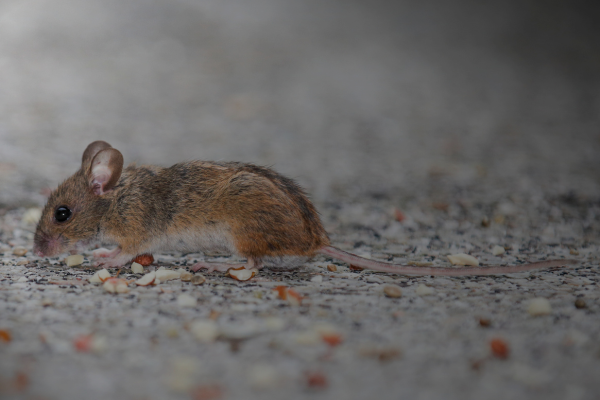
A house mouse (Mus musculus) weighs 12 g to 30 g, measures 7–10 cm long. Traits: pointed snout, large floppy ears, large eyes, long tails, and a light brown coat. Mice enter gaps as small as 6 mm.
Norway Rat and Roof Rat
The Norway rat (Rattus norvegicus) weighs 200 g to 500 g, reaches 20 cm or more. Traits: thick body, blunt snout, smaller ears, and shorter scaly tails.
The roof rat is slimmer, with large ears and a longer tail — it nests in attics and trees.
Mouse Droppings vs Rat Droppings: What to Look For
Droppings are the most reliable identification sign.
Mouse Droppings vs Rat Droppings: What to Look For
Droppings are the most reliable identification sign.
Mouse Droppings vs Rat Droppings
Mouse poop is 6 mm long with pointed ends — grain-of-rice sized. Mice leave 50 to 75 droppings daily.
Norway rat droppings are 19 mm with blunt ends — olive-sized. Roof rat droppings are smaller. The deer mouse — not the Norway rat — is Canada’s primary Hantavirus carrier. Treat all rodent droppings as infectious.
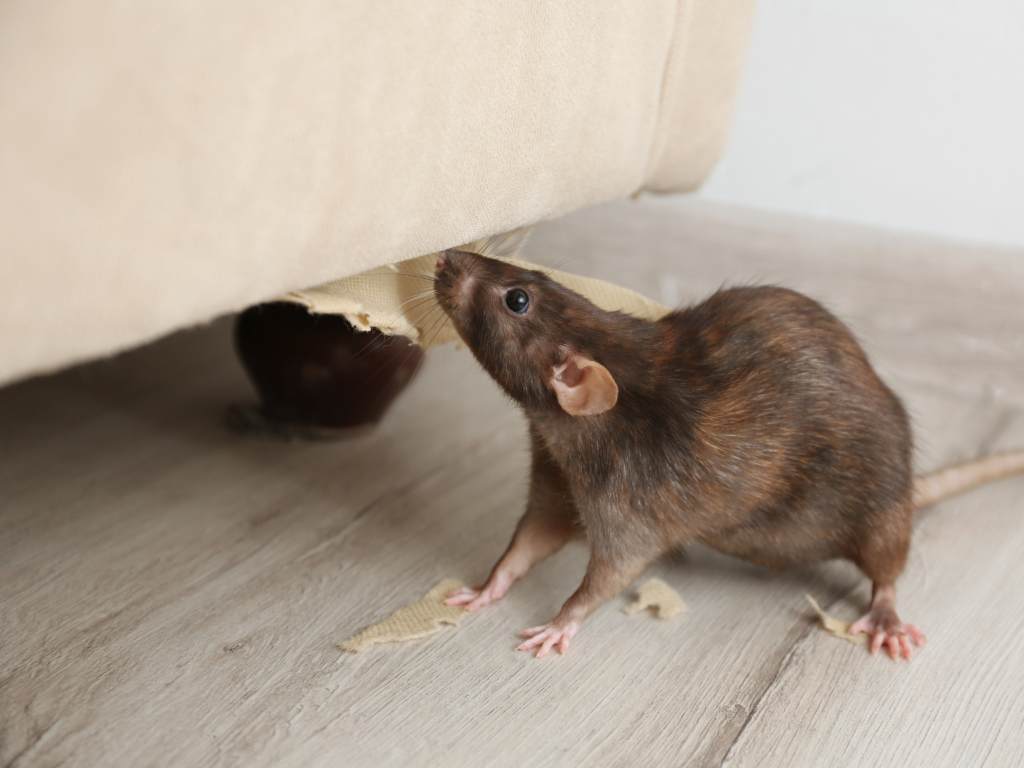
Rats vs Mice Behavior
How Mice Behave
Mice are curious explorers that investigate new objects immediately. A female mouse breeds up to eight litters per year. Mice use their hind legs to jump 13 inches, climb surfaces, and build nests from shredded paper or fabric near food.
How Rats Behave
Rats exhibit neophobia — they fear new objects and avoid change. Rat behavior is hierarchical and organized. Rats consume up to one ounce of water daily. In rural areas and cities alike, Norway rats burrow underground while roof rats nest in high places.
How Rats and Mice Enter Your Home
Mice enter gaps as small as 6 mm; rats need 13 mm. Both exploit pipes, crawl spaces, attic vents, and wall gaps. Inspect ground level and rooflines for entry signs.
Health Risks from Rats and Mice
Both species carry pathogens. Rodent bites transmit disease to humans, pets, and animals. Rats carry ticks and fleas. Rodent urine contaminates food — a serious pest problem in any building.
Rid your home of rodents quickly. Both contaminate food, cause extensive damage, and reproduce rapidly wherever food, water, and shelter are available.
How to Clean Up and Control Rats and Mice
Safe Clean Up After Rodents
Wear rubber gloves before touching dead rodents or droppings. Ventilate 30 minutes first. Spray disinfectant on droppings; never vacuum dry. Double bag waste. Wash hands after removing gloves.
Prevent Mice and Rats From Returning
Prevent mice by sealing entry points with steel wool and caulk. Store pet food in sealed containers. Remove nesting materials — paper towels and debris. Eliminate food sources in burrows and crawl spaces.
Traps and Pest Control
Snap traps are the most effective option for mice and young rats. Place along walls near gnaw marks. Rats avoid new objects — wait a few days before setting traps.
Ultrasonic devices and bright lights are not effective long-term. Effective pest control addresses nesting materials, entry points, and food sources — not just snap traps alone.
🐀 Rats or Mice in Your Barrie Home? Call Top Choice Pest Control — Free Estimate | Expert Identification | Guaranteed
Frequently Asked Questions — Rats vs Mice
How do I tell rats vs mice apart from droppings alone?
Mouse droppings are 6 mm long with pointed ends — roughly the size of a grain of rice. Rat droppings are 12–19 mm with blunt ends, closer to olive-sized. Location matters too: mouse poop appears near food sources and nesting areas; rat droppings are often found along walls and near burrows. More than 50 droppings per day typically confirms a mouse population, not rats.
Can a house mouse and a rat live in the same building?
Rarely. Rat behavior is territorial — rats and mice typically do not cohabit. Where Norway rats are established, both stay in separate zones; rats usually drive mice out. Finding both mouse droppings and large rat droppings may indicate a transitional infestation or a large building with divided nesting sites.
How do I clean up safely after dead rodents or droppings?
Dead rodents and droppings carry serious health risks including Hantavirus. Always wear rubber gloves before touching anything. Spray droppings with a bleach solution or disinfectant — never sweep dry. Double bag all waste in plastic bags and dispose immediately. Wash hands thoroughly after removing gloves. Ventilate the area for at least 30 minutes before beginning clean up work.
Do ultrasonic devices actually work against rats and mice?
Ultrasonic devices are not effective long-term for rodent control. Mice and rats habituate to the sound quickly — often within days. While some short-term movement disruption may occur, neither mice and rats nor other rodents are reliably deterred by ultrasound alone. Traps, exclusion, and removing the food source are the only methods consistently supported by pest control research.
When should I call professional pest control instead of handling it myself?
Call professional pest control if: you find rat droppings larger than 12 mm, you hear scratching sounds in walls or crawl spaces at night, snap traps catch nothing after several days, or the infestation spans multiple rooms. Effective pest control for Rattus norvegicus and established mouse populations requires exclusion, baiting strategy, and sealing entry points — work that goes beyond a single trap.
Know What You Are Dealing With — Then Act Fast
Identify rats vs mice correctly — then act. Key signs: gnaw marks, droppings, scratching sounds, and garbage near walls. Both spread disease and cause extensive damage.
Contact pest control at the first sign. Delay allows mouse populations and rat colonies to multiply fast.
📞 Book Your Free Rodent Inspection Today — Barrie & Simcoe County | topchoicepestcontrol.ca | 416-904-5351