Ontario is home to several types of ants species that regularly enter homes and businesses, including carpenter ants, pavement ants, pharaoh ants, and odorous house ants. Top Choice Pest Control helps homeowners across Ontario identify what they are dealing with so the correct ant control method can be applied before the problem grows.
Key Takeaways
- Carpenter ants are the largest common ant species in Ontario, with workers reaching up to 13mm and queens up to 25mm in length.
- Pharaoh ants measure approximately 2mm and can spread bacteria including Salmonella by contaminating food surfaces in homes.
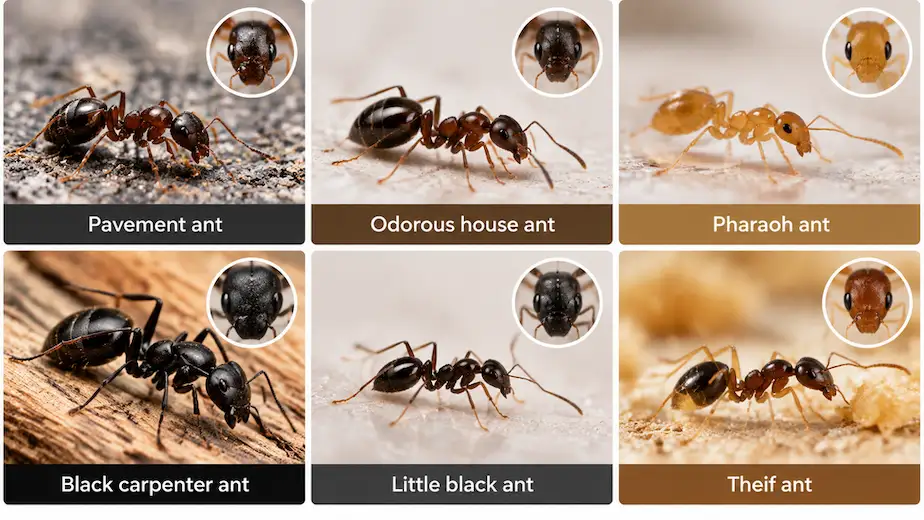
- Pavement ants range from 2.5 to 4mm and are identified by two spines on the thorax and parallel grooves on the head and thorax.
- Carpenter ants do not eat wood—they tunnel through it to create nesting galleries, which is why carpenter ant infestations are a structural concern and not simply a nuisance.
- Odorous house ants release a distinctive rotten-coconut smell when crushed, which is the fastest identification method for this species indoors.
Types of Ants in Ontario, Defined
Ant species in Ontario are social insects that live in organized colonies made up of a queen ant, worker ants, and reproductive ants. The most common ants found in Barrie and surrounding areas include black carpenter ants, pavement ants, pharaoh ants, and odorous house ants. Each ant species differs in size, color, nesting preference, food source, and the level of structural damage or contamination it poses to homes and families.
How It Works
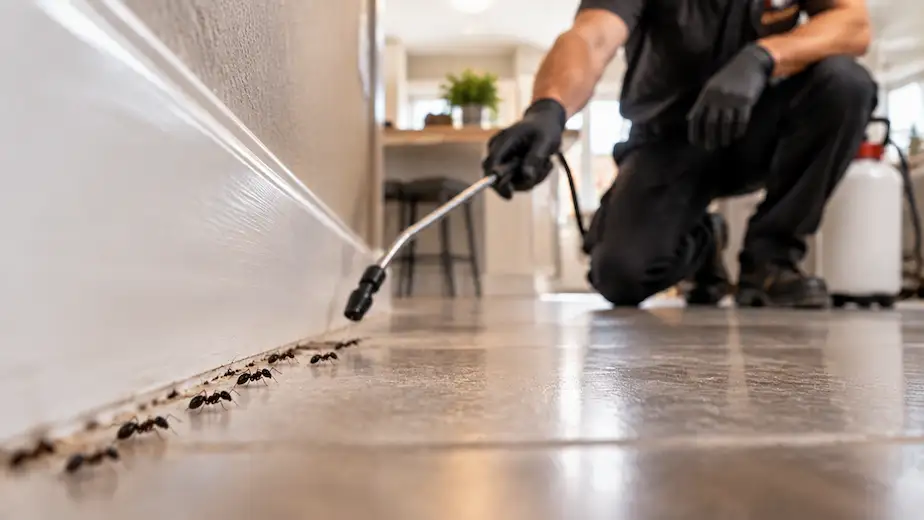
Ant colonies follow a predictable growth pattern: a queen establishes a nest, worker ants begin foraging for food, and the colony expands until it becomes visible or causes damage indoors.
Step by Step
Most ant infestations pass through three overlapping phases before they become obvious inside a home or building.
Stage One
A fertilized queen ant locates a sheltered site—decaying wood, soil beneath patio stones, or a wall void—and begins laying eggs. This founding phase can take weeks to months. The queen raises the first generation of worker ants before the colony becomes self-sustaining and foraging activity begins.
Stage Two
Worker ants establish ant trails and search for sugary foods, greasy foods, proteins, and animal matter. As the colony grows, foraging ants extend their range into the home. Reproductive ants develop within the colony, and winged ants—also called flying ants—emerge when the colony is ready to swarm and start new nests.
Stage Three
Signs of ant activity become clear: ant trails along window sills and window frames; coarse sawdust-like frass near wooden structures indicating carpenter ants; or winged ants indoors during the cold winter months, which often signals an established indoor nest rather than swarmers entering from outside.
The Main Types
Ontario’s four most common ant species differ in size, appearance, and risk level. The species table below covers the key identification points for each.
Type Comparison Table
| Species | Size | Color | Nesting site | Key risk |
|---|---|---|---|---|
| Black carpenter ant | 6–13mm (queen to 25mm) | Black | Decaying or structural wood, wall voids | Structural damage |
| Pavement ant | 2.5–4mm | Dark brown | Under patio stones, soil, foundations | Food contamination |
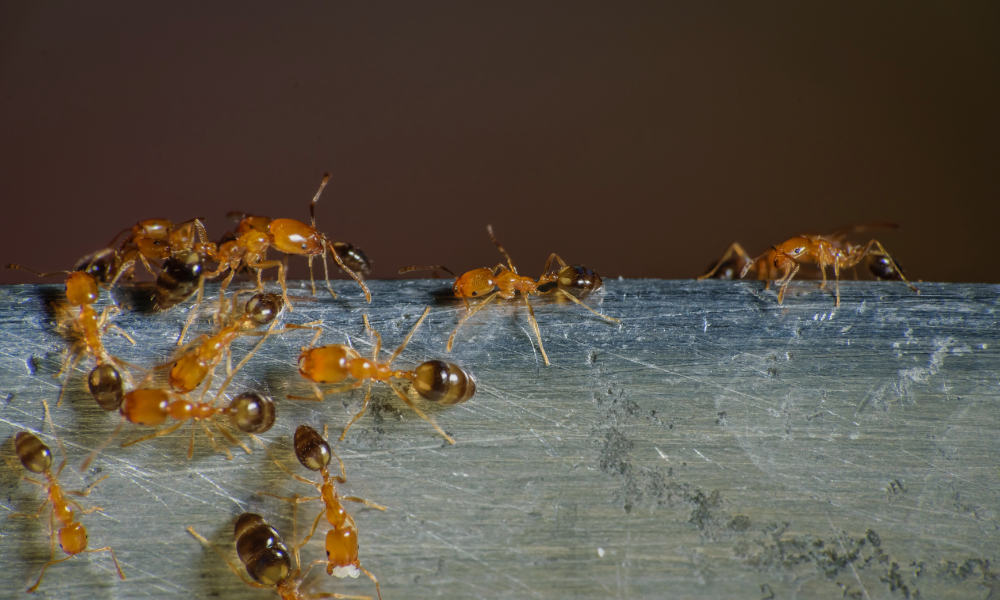
| Pharaoh ant | ~2mm | Yellowish brown | Wall voids, heated indoor areas | Bacterial spread, colony splitting |
| Odorous house ant | 2.4–3.3mm | Dark brown to black | Under floors, wall voids | Food contamination, odour |
Carpenter Ants
Black carpenter ants are the most structurally damaging ant species found in Ontario. Workers range from 6–13mm; queens can reach 25mm. Some populations display a reddish brown upper body segment. They tunnel through decaying wood and structural wood to create smooth-walled galleries for nesting, and favour damp areas near plumbing leaks indoors. Carpenter ants do not eat wood—they remove it. For treatment options specific to the Barrie area, see ant control in Barrie.
Best Suited To
Professional ant control is the appropriate response when carpenter ants are found inside walls, structural wood, or ceiling voids. Residual sprays treat foraging ants but rarely reach the parent colony. Chemical control produces the best results when combined with physical control—eliminating moisture sources and sealing entry points after treatment.
Limitation to Know
Carpenter ants often establish satellite colonies inside buildings while the parent colony remains in a tree stump or decaying wood outdoors, making full elimination difficult without a professional inspection.
Pavement Ants
Pavement ants are 2.5–4mm, dark brown, and identified by two spines on the thorax and fine parallel lines on the head. They build underground colonies beneath patio stones, concrete slabs, and foundations, and enter homes through sealed cracks seeking sugary foods and greasy foods. For help with smaller ant species, the resource on ant control for small species covers the full range of small indoor species and applicable treatments.
What It Is Not
Flying ants vs. termites. Winged ants are regularly mistaken for termites. Ants have a very slim waist, elbowed antennae, and forewings larger than hindwings. Termites have a broad waist, straight antennae, and wings of equal length. The distinction matters because treatments differ entirely.
Pharaoh ants vs. other small ants. Pharaoh ants are sometimes confused with odorous house ants due to their small size and indoor nesting. Applying repellent sprays to pharaoh ant colonies causes them to split into multiple satellite colonies, spreading the ant infestation further. Baiting is the recommended approach. For a full explanation of their behaviour, see what are pharaoh ants.
Red carpenter ants vs. fire ants. Fire ants are not established in Ontario. Red-bodied ants in southern Ontario or southwestern Ontario are more likely red carpenter ants, not fire ants. Fire ants remain a concern in the United States but are not a confirmed residential ant species in the province.
Who It Suits in Ontario
Ontario homeowners face ant pressure from early spring through fall, with carpenter ants active earliest and pharaoh ants active year-round indoors. The Ontario pest calendar seasonal pests resource outlines when each ant species peaks in Barrie and surrounding Simcoe County, helping homeowners time inspections and treatments effectively.
Residents dealing with large ant colonies, structural concerns, or recurring ant infestations benefit most from professional assessment. Top Choice Pest Control also provides ant control in Vaughan for clients across the Greater Toronto Area who encounter the same common ant species found throughout southern Ontario.
Frequently Asked Questions
What are the most common types of ants in Ontario?
The most common ants in Ontario are black carpenter ants, pavement ants, pharaoh ants, and odorous house ants. Carpenter ants are the largest and most structurally damaging. Pharaoh ants are the smallest and hardest to eliminate because colonies split when disturbed. Pavement ants and odorous house ants are primarily nuisance species that contaminate food surfaces.
How do I know if I have carpenter ants or flying ants?
Flying ants and carpenter ants are not mutually exclusive—carpenter ants produce winged reproductive ants that swarm to start new colonies. If you see winged ants indoors during winter or early spring, this typically indicates an established indoor nest nearby. Winged carpenter ants are larger than most other flying ant species found in Ontario.
How do I get rid of an ant infestation indoors?
For pavement ants and odorous house ants, sealing entry points, storing food in sealed containers, and eliminating food sources reduces pressure. For carpenter ants and pharaoh ants, an ant exterminator is usually necessary—sprays alone do not reach the colony. Baiting is the most effective approach for pharaoh ants specifically, as sprays cause colonies to split.
Do Argentine ants live in Ontario?
Argentine ants are not widely established in Ontario. They are occasionally intercepted in shipments and may survive briefly in heated indoor environments, but they are not considered a resident pest species in the province. Argentine ants thrive in warmer climates and their confirmed Canadian range remains limited compared to populations in the southern United States.
About Top Choice Pest Control
Top Choice Pest Control serves Barrie and surrounding communities with licensed, professionally trained technicians and treatments that follow Health Canada guidelines. Services cover ant control, bed bugs, cockroaches, rodents, wasps, spiders, and wildlife. The company holds all required Ontario licences and carries liability insurance. GTA clients can review service options through ant control in Vaughan for full coverage details.
Service Area
Top Choice Pest Control operates throughout Barrie, Innisfil, Angus, Orillia, and the broader Simcoe County region. The company also serves clients across the Greater Toronto Area, including Vaughan, North York, and surrounding municipalities in southern Ontario.
Next Step
If you have identified an ant species in your home and want it assessed and treated, contact Top Choice Pest Control for an inspection. Book through the ant control in Vaughan page or reach the Barrie office directly.
Explore the full range of solutions at Top Choice Pest Control services.