TOP CHOICE PEST CONTROL | BARRIE, ONTARIO
Key Takeaways
✔ Ants enter homes seeking food, moisture, and shelter — especially in spring and summer.
✔ Identifying the ant species is critical. Carpenter ants, pavement ants, pharaoh ants, and odorous house ants each require different control strategies.
✔ Carpenter ants nest in moist or damaged wood and cause significant structural damage over time.
✔ Ant baits are the most effective long-term control — they allow foraging workers to carry poison back to the colony.
✔ Sealing entry points and removing food residue are the two most effective prevention steps.
✔ Pharaoh ants create multiple sub-colonies when disturbed — never spray them; use baits only.
Introduction
Ants are coming into your house because your home offers what every ant colony needs: food, water, and shelter. The reason ants invade — and the right way to stop them — depends entirely on the ant species involved. Ontario has over 100 ant species, but only a few commonly infest homes in Barrie: carpenter ants, pavement ants, odorous house ants, and pharaoh ants. Ant behavior varies with the seasons, with increased activity in spring and summer. This guide covers why ants enter homes, how to identify the species, and how to control ants for good.
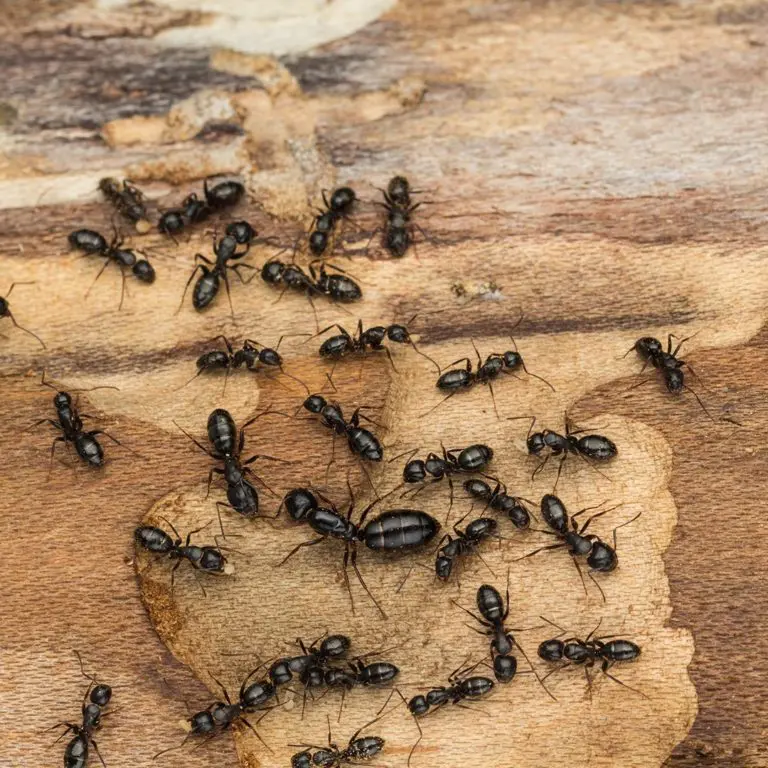
Why Are Ants Coming Into My House?
Ants enter homes through cracks and crevices seeking food, moisture, and nesting sites. Ant problems peak in spring and summer when colonies expand. Most ant species bring ants indoors through pheromone trails — once a foraging worker finds food, the ant colony sends more workers along the same route.
Food Sources
Ants are attracted to sugary, greasy, and protein-rich foods. Sweet foods like syrup, fruit, and spilled drinks attract most ants. Pet food left out overnight is a reliable food source. Even small amounts of food residue on counters, in drains, or behind appliances sustain foraging ants. Cleaning food spills reduces ant attraction significantly.
Moisture
Many ant species are attracted to moisture, making damp environments more conducive to infestations. Leaking pipes, condensation, and water-damaged wood are primary attractants. Moisture problems in wood specifically attract carpenter ants indoors. Carpenter ants prefer nesting in moist or damaged wood over sound wood.
Shelter and Extreme Weather
Ants seek shelter indoors during extreme weather conditions — heavy rain, drought, and cold all drive ant activity inside. In Barrie, property owners encounter common ant species due to seasonal climate shifts. Spring warmth triggers queens to start new colonies; summer heat pushes foraging workers deeper into homes.
Pheromone Trails and Scent Cues
Ants leave pheromone trails to guide others to food sources. A single foraging worker finding food in your kitchen triggers a flood of foraging ants within hours. Removing food residue and cleaning trails with soapy water disrupts these chemical signals, making indoor foraging less productive for the colony.
Identifying Ants: Which Species Is in Your Home?
Identifying the ant species is critical for effective control. Understanding an ant’s biology — colony structure, food preferences, and nesting habits — determines the right treatment. Spraying pharaoh ants makes infestations dramatically worse.
Ants vary in size from 1/20 inch to 1/2 inch long. Ants have a constricted waist and bent antennae, which distinguishes them from termites. Most ants have one or two nodes on the petiole — the narrow segment between the thorax and abdomen.
Carpenter Ants — Identifying Ants That Damage Wood
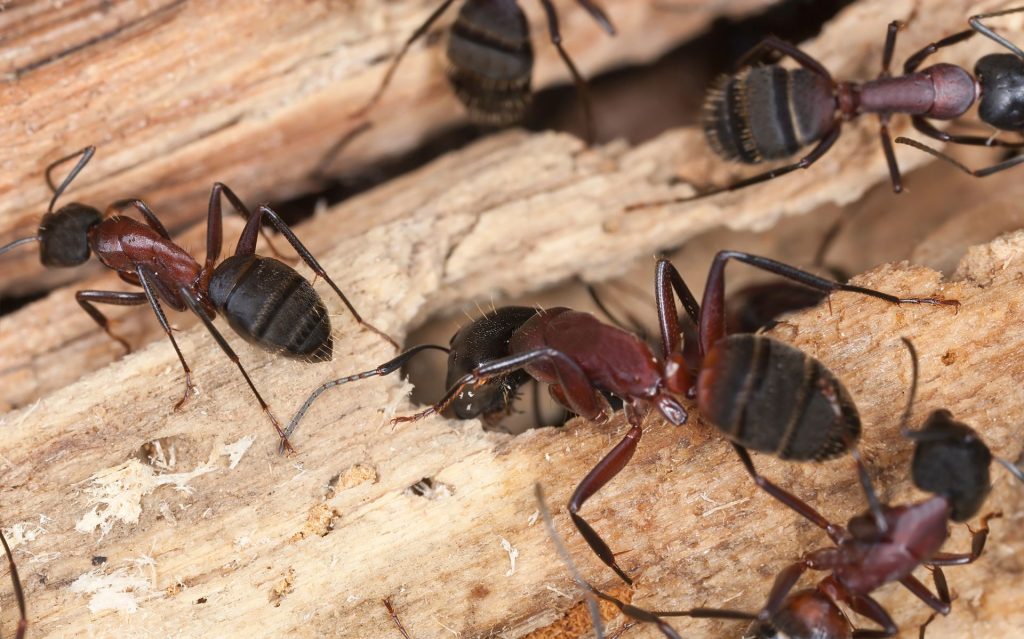
Carpenter ants are the largest ants commonly found indoors in Barrie — up to 1/2 inch long. Large black ants seen indoors indicate a likely carpenter ant infestation. Carpenter ants have elbowed antennae and a narrow waist, unlike termites with straight antennae. Wingless females are the worker caste. Dead ants or frass near wood are reliable infestation indicators. Carpenter ant bites are rare but possible if the ant feels threatened.
Carpenter ants feed on sugars, proteins, and other insects — they do not eat wood. Carpenter ants excavate wood to nest in it, leaving behind frass: sawdust-like debris mixed with insect fragments near nest sites.
A carpenter ant colony can have multiple satellite nests connected to a parent colony in a tree stump, rotting wood, or moisture damaged wood outdoors. Carpenter ant colonies indoors are typically satellite nests — finding and treating only the indoor satellite nest without addressing the parent colony leads to treatment failure.
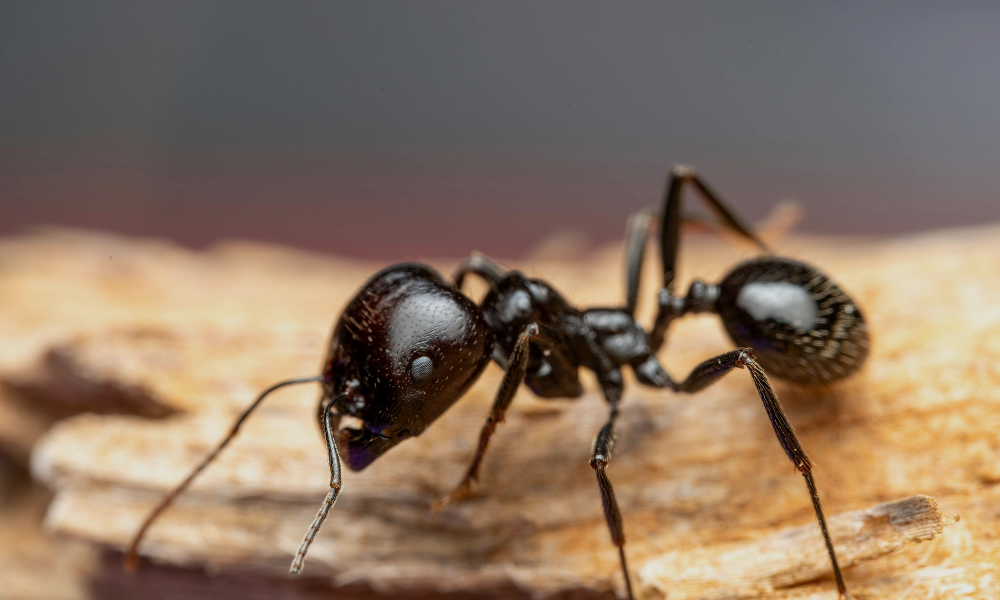
Pavement Ants — Common Under Slabs and Driveways
Pavement ants build nests beneath concrete slabs and driveways. They forage along established scent trails into kitchens and pantries, drawn to both sweet foods and proteins. Pavement ants are among the most common household ants in Barrie.
Odorous House Ants — The Coconut Ant
Odorous house ants are small, dark ants that emit a coconut-like scent when crushed — the most reliable identification sign. They form large colonies with multiple queens in wall voids, under floors, and decaying wood. They prefer sweet foods and are extremely common in Barrie kitchens.
Pharaoh Ants — The Hardest to Control
Pharaoh ants are tiny, pale yellow ants with multiple queens per colony. Each species nest can fragment when disturbed — spraying pharaoh ants causes the colony to scatter and spread. Pharaoh ants must be controlled exclusively through ant baits. Never spray them with repellent insecticide.
Thief Ants and Other Ant Species
Thief ants are tiny, pale ants that nest near other ant species and steal their food. Not all ants in a Barrie home are the same — thief ants, winged male ants from mating swarms, and other ant species appear indoors for different reasons. Winged ants inside indicate a nearby indoor nest.
Carpenter Ant Colonies: Signs and Structural Risk
Carpenter ant infestations are the most serious ant problem Barrie homeowners face. Carpenter ants can cause significant structural damage over time — not through eating wood, but through excavating hollow spaces in structural wood, wooden structures, and wall voids.
Signs of a Carpenter Ant Infestation
Finding frass — coarse sawdust mixed with insect debris — near baseboards or wall joints is the most reliable sign. Winged ants emerging from walls in spring indicate an established colony with a carpenter ant queen producing new reproductives. Carpenter ants indoors are most active between 10 p.m. and 2 a.m.
Indoor vs Outdoor Carpenter Ant Nests
The parent colony nests in tree stumps, tree branches, and rotting wood near foundations. Indoors, satellite nests establish in moisture damaged wood near roof leaks and plumbing voids. To find carpenter ants, follow the trail back from any indoor sighting toward moisture sources.
Carpenter ant colonies with a carpenter ant queen can grow to 3,000 workers or more over several years, with satellite nests spanning multiple wall voids.
How to Control Ants and Get Rid of Ants in Your Home
Step 1: Identify the Ant Species Before Acting
Ants must be managed through targeted strategies that address colony sources. Applying the wrong treatment — particularly spraying pharaoh ants or odorous house ants with repellent insecticide — disperses the colony and multiplies nest sites. Identify the species first. If in doubt, contact a pest control professional before treating.
Step 2: Remove Food Sources and Clean Trails
Food sources should be removed to control ant infestations. Store pet food in sealed containers. Clean food spills immediately. Remove food residue from counters, behind appliances, and under sinks. Ant trails along baseboards can be cleaned with soapy water to disrupt pheromone signals and discourage ants from returning.
Step 3: Use Ant Baits for Colony Elimination
Ant baits are effective for long-term colony elimination. Worker ants and foraging workers carry toxic bait back to the colony — including the ant queen — eliminating it over one to two weeks. Gel baits work well for odorous house ants and pavement ants along ant trails. For pharaoh ants, slow-acting baits are essential — never use repellent sprays alongside baits.
Step 4: Seal Entry Points
Seal cracks and gaps to prevent ant entry. Inspect around pipes, utility penetrations, window frames, and foundation cracks. Use caulk or steel wool for small gaps. Install door sweeps on exterior doors. Sealing entry points helps prevent ant infestations from re-establishing after treatment.
Step 5: Address Moisture Problems
Fix leaking pipes and improve ventilation. Replace moisture damaged wood before it becomes a carpenter ant nest site. Trim tree branches away from the roofline — they provide a highway for carpenter ants into the structure.
Diatomaceous Earth and Other Control Methods
Diatomaceous earth kills ants on contact by dehydration. Use it alongside ant baits in dry areas — under appliances, along baseboards, and in crawl spaces. It does not eliminate the colony on its own. Do not apply in damp areas or outdoors.
When to Call a Pest Control Professional
Professional exterminators can eliminate entire ant colonies using professional-grade products not available to the public. Contact a pest control professional when: carpenter ants are found inside structural wood; pharaoh ant infestations have spread across multiple rooms; or ant baits alone have not resolved the infestation after two weeks. A pest control professional inspects for the parent colony, satellite nests, and moisture sources — not just the visible ants.
How to Prevent Ants From Returning
Prevent ants from re-establishing by eliminating the conditions that attract them. These prevention steps work year round for all common household ants in Barrie.
• Prevent carpenter ants by fixing all moisture problems — roof leaks, plumbing drips, and poor drainage near the foundation
• Remove food residue daily — wipe counters, clean drains, and empty pet food bowls at night
• Seal entry points around utility lines, windows, and door frames with caulk
• Store dry goods and sweet foods in sealed containers
• Trim tree branches and shrubs away from the exterior walls and roofline
• Remove tree stumps, decaying wood, and infested wood from the property — these are primary carpenter ant colony sites
• Schedule annual inspections with a pest control professional in Barrie for early detection
Other ants — pavement ants and odorous house ants — become active in early spring alongside carpenter ants. Prevention taken in late winter is always more effective than reactive treatment once an ant infestation is established.
🐜 Ant Problem in Barrie? Call Top Choice Pest Control — Free Estimate | QualityPro Certified | 6-Month Guarantee
Frequently Asked Questions — Ants in Your Home
Why do I have ants in my house when it is clean?
Even clean homes attract ants. Ants are drawn to moisture, shelter, and food residues invisible to the human eye — grease behind appliances, crumbs under furniture, and pet food. Most ants follow pheromone trails from foraging workers who found a water source. Identifying the ant species tells you whether you are dealing with moisture, food, or an established indoor ant colony.
How do I identify carpenter ants and tell them apart from black ants?
Carpenter ants are the largest ants found indoors — up to 1/2 inch long, black or bi-coloured, with elbowed antennae and a narrow thorax. Black ants is a general term covering many different ant species. The most important identifying ants sign: coarse frass — sawdust mixed with insect debris — near wood confirms a carpenter ant infestation.
What do carpenter ants eat and why do they come inside?
Carpenter ants feed on proteins, sugars, and other insects — not wood. Carpenter ants eat honeydew from aphids outdoors, and target pet food, syrup, meat, and grease indoors. Carpenter ants come inside because indoor wood with moisture damage offers ideal nesting conditions. The parent colony remains outdoors in a tree stump or rotting wood; satellite nests are established indoors near moisture problems.
What is the best way to get rid of ants permanently?
Get rid of ants permanently by targeting the colony, not just the visible foragers. Ant baits are the most effective long-term approach — foraging workers carry bait back to kill ants throughout the colony including the ant queen. To get rid of carpenter ant colonies specifically, eliminate moisture problems and locate satellite nests in wall voids. A pest control professional addresses the parent colony and all satellite nests.
How do I control ants without harming pets or children?
Control ants safely using enclosed bait stations — pet food-sized station openings exclude most pets but allow foraging ants inside. Diatomaceous earth is a low-toxicity physical control safe around children and pets when used in dry areas. Seal entry points and remove food sources to prevent ants without any chemical use. For pharaoh ant infestations, professional pest control using low-toxicity gel baits is the safest and most effective solution.
Stop Ants Before They Establish — Contact Top Choice Pest Control
Ants are seasonal in Barrie, but an established carpenter ant colony in structural wood or a pharaoh ant infestation spreading across rooms rarely resolves without professional help. Top Choice Pest Control has served Barrie since 2015. QualityPro certified technicians identify the ant species, locate satellite nests, and apply the right treatment for lasting results — backed by a 6-month guarantee.
📞 Call Top Choice Pest Control | 416-904-5351 | Barrie Ant Control | Free Estimate | 6-Month Guarantee
Top Choice Pest Control | Barrie, Ontario | QualityPro Certified | 8× HomeStars Award | Licensed & Insured