To get rid of fruit flies, remove the food source, set an apple cider vinegar trap, and clean any breeding sites. If small flies cluster near your sink rather than your produce, they may be drain flies. Top Choice Pest Control helps Ontario homeowners identify and eliminate both. This guide covers four DIY steps and the point at which a professional is the right call.
Key Takeaways
- Adult fruit flies are 3–4mm long, tan or brown, with distinctive red eyes, and are drawn to overripe or rotting produce.
- Female fruit flies can lay up to 500 eggs at a time; the full life cycle can complete in as few as 8–10 days under warm conditions.
- Apple cider vinegar traps catch adult fruit flies but do not reach eggs or larvae already in a breeding site.
- Drain flies look moth-like with fuzzy wings and gather near drains, not near the fruit bowl or trash can.
- Fruit flies do not bite but can transfer bacteria to food surfaces as they move between rotting organic matter and kitchen counters.
Before You Start
Most fruit fly infestations respond to DIY methods within one to two weeks. If flies persist after thorough source removal and consistent trapping, or if they appear to emerge from inside a drain or wall, a professional inspection is more appropriate than further DIY attempts.
What You Need
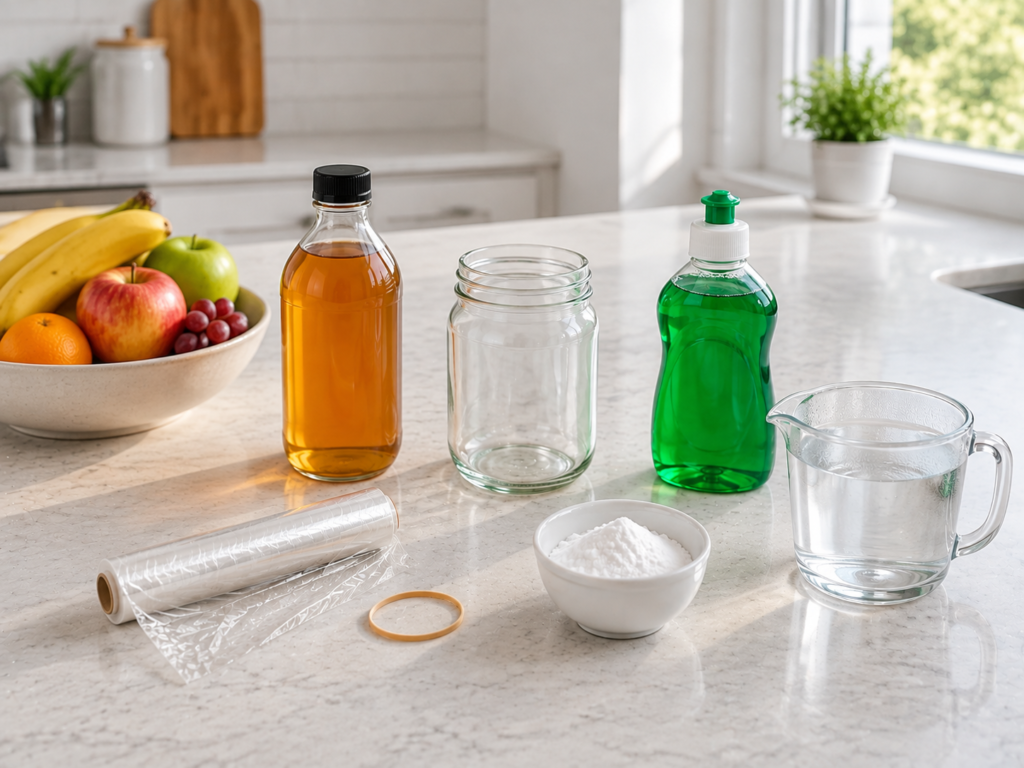
- Apple cider vinegar
- Dish soap
- A mason jar or empty bottle
- Plastic wrap and a rubber band
- Baking soda and boiling water (for drain treatment)
Safety and Prerequisites
Pour boiling water carefully to avoid splashing, and never combine it with bleach in the same drain. If you use any commercial product, follow all label directions and keep children and pets away from treated surfaces until completely dry.
Step-by-Step
Confirm the fly type before treating. The table below covers the two most common kitchen species.
| Feature | Fruit fly | Drain fly |
|---|---|---|
| Size | 3–4mm | 1.5–5mm |
| Appearance | Tan or brown, red eyes | Moth-like, fuzzy wings |
| Location | Near produce, fruit bowl, trash | Near sink, floor drains |
| Breeding site | Ripe or decayed fruit, food waste | Organic matter inside unclean drains |
Step 1 — Remove Every Food Source
Check the kitchen for decayed fruit, overripe vegetables, and any rotting organic matter in the fruit bowl, under the fridge, and inside trash bins. Refrigerate all ripe fruit. Empty and wash trash cans. Clean inside the garbage disposal. A meaningful drop in adult flies should appear within 24–48 hours of eliminating the food source.
Step 2 — Set an Apple Cider Vinegar Trap
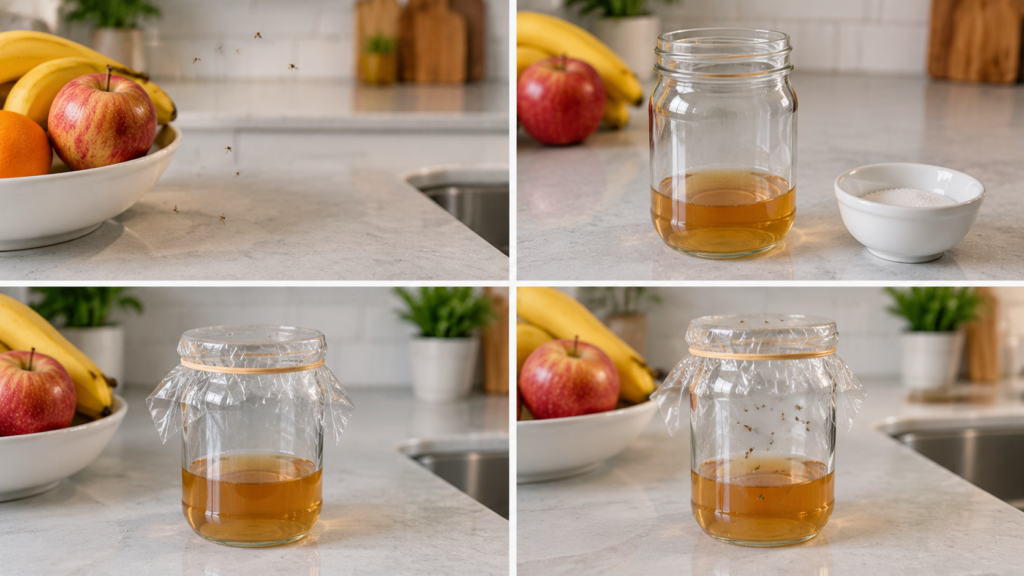
Pour a small amount of apple cider vinegar into a mason jar or empty bottle. Add a few drops of dish soap to break the surface tension so flies sink rather than escape. Cover the opening with plastic wrap secured with a rubber band, then poke a few small holes in the top. Flies are attracted to the vinegar, enter through the tiny holes, and cannot get out.
If It Does Not Work First Time
If the trap collects few flies after 48 hours, a breeding source still exists somewhere. Check inside covered trash bins, compost containers, empty bottles in recycling, and the back of pantry shelves for forgotten produce.
Most Common Cause
The most common reason traps fail is that food waste or fermenting residue remains in the kitchen—often inside the garbage disposal, a damp cloth, or a bin the trap was not placed near.
Stop Here If You See This
If flies cluster near or emerge from the drain rather than hovering around food, you are dealing with drain flies—move to Step 3.
Step 3 — Treat the Drain if Needed
For drain flies or fruit fly activity near the kitchen sink, pour boiling water down the drain to kill larvae and loosen organic buildup, then follow with a baking soda flush. For a direct comparison of these two pest types, see fruit flies vs drain flies vs fungus gnats before committing to a treatment method.
Step 4 — Prevent a Return
Store fresh fruit in the refrigerator or in sealed containers. Take out food waste daily. Rinse bottles before recycling. Run the garbage disposal with hot water after each use. Wipe the fruit bowl and any damp surfaces weekly. Keeping fruit flies out depends on removing consistent access to food and damp organic material.
When DIY Stops Being Sensible
If a fruit fly infestation continues beyond two to three weeks despite thorough source removal, eggs and larvae are likely in a location you cannot reach—inside a drain line, under flooring, or behind a wall. Traps catch adult flies but cannot break a breeding cycle established in an inaccessible site. The same logic applies to other persistent kitchen pests: if you are also dealing with how to get rid of black ants at the same time, multiple active infestations together are a sign the home needs a professional assessment. Top Choice’s fly control services are the appropriate step for persistent Barrie cases.
What a Barrie Professional Does Differently
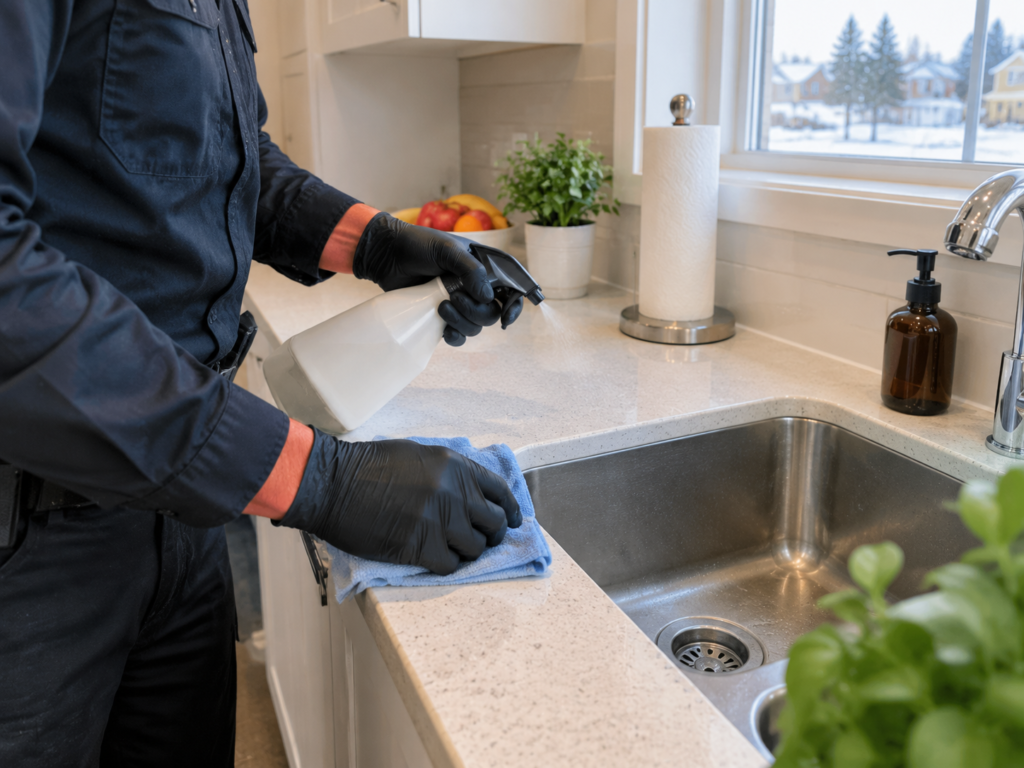
Top Choice Pest Control technicians inspect the complete kitchen environment, including drain systems, wall voids, and hidden accumulation points a homeowner cannot see during a standard clean. Treatment is directed at the confirmed breeding site, not just the adult fly population. Enzyme-based drain treatments used by professionals eliminate organic matter that boiling water alone cannot clear. Top Choice also addresses other household pest concerns—from how to get rid of mice to how to get rid of a bees nest—so a single call can cover multiple active problems.
Frequently Asked Questions
What attracts fruit flies to a clean kitchen?
Fruit flies are drawn to fermentation, not just visible dirt. A clean kitchen can still host them if there is residue inside a recycling bin, a damp cloth, a mop head, or spilled juice behind an appliance. Fruit fly eggs hatch in 24–30 hours, so even brief access to a damp food source is enough to start a new population.
What is the fastest way to get rid of fruit flies?
Remove every food source and set an apple cider vinegar trap with a few drops of dish soap at the same time. The combination of source removal and trapping typically reduces adult populations within 48–72 hours. Traps alone do not eliminate a fruit fly infestation when the breeding site is still present and active.
How do I know if I have fruit flies or drain flies?
Fruit flies are tan or brown with red eyes and hover near produce and trash. Drain flies are small and moth-like with fuzzy wings, clustered near sinks and floor drains. Place plastic wrap tightly over a drain overnight: if small flies are trapped on the underside by morning, the breeding source is the drain, not your fruit bowl.
Can fruit fly eggs survive in the refrigerator?
No. Fruit fly eggs and larvae do not survive refrigerator temperatures. Storing produce in the fridge removes both the food source and the warm environment needed for eggs to develop. Adult flies already in the kitchen can survive at room temperature but cannot reproduce without access to warm, moist organic matter.
About Top Choice Pest Control
Top Choice Pest Control serves Barrie and surrounding communities with licensed technicians following Health Canada guidelines. Services cover fly control, ants, bed bugs, cockroaches, rodents, wasps, and wildlife. All required Ontario licences are held and liability insurance is carried. Review the full range of fly control services on the company website.
Service Area
Top Choice Pest Control operates throughout Barrie, Innisfil, Angus, Orillia, and the broader Simcoe County region, as well as across the Greater Toronto Area and surrounding southern Ontario municipalities.
Next Step
If fruit flies or drain flies have persisted in your Barrie kitchen despite your own attempts, contact Top Choice Pest Control for an inspection. Book through the fly control services page.
Explore the full range of solutions at Top Choice Pest Control services.